Blog

  • Best Time to Book Return Flights to Australia

    Best Time to Book Return Flights to Australia

    Booked tickets 8 weeks before travel: $2,200 per person.

    Waited until 4 weeks before: $3,400 per person.

    Difference for family of 4: $4,800.

    Timing matters.

    This guide shows you exactly when to book for the lowest prices.

    The Sweet Spot: 22-26 Weeks Ahead

    For most Nepal-Australia routes, booking 22-26 weeks (5-6 months) before travel offers the best value.

    Why this window:

    • Airlines released the full inventory
    • Yield management is not aggressive yet
    • Group rates available
    • Enough time for visa processing

    Too early (30+ weeks):

    • Airlines haven’t released all seats
    • Fewer sales/promotions
    • Can’t accurately predict demand

    Too late (under 12 weeks):

    • Prices surge as seats fill
    • Group rates harder to get
    • Fewer seat selections
    • Assistance services might be fully booked

    International flight prices to Australia typically surge by 30-40% during peak season (December/January). Booking at least 22 weeks in advance is the sweet spot for Australian long-haul routes.

    Return flights and long-stay travel to Australia explains why return tickets save money.

    Price Patterns by Season

    Not all months are equal.

    Peak Season Pricing (December-January, April, September-October)

    Characteristics:

    • Highest prices (30-40% above baseline)
    • Seats sell out fast
    • Less flexibility
    • Limited group rate availability

    Best booking window: 26-30 weeks ahead

    Book earlier than normal for peak season. Waiting costs more.

    Example prices (return ticket per person):

    • Booked 28 weeks ahead: $2,400
    • Booked 16 weeks ahead: $2,900
    • Booked 8 weeks ahead: $3,600

    Shoulder Season (February-March, August, November)

    Characteristics:

    • Standard pricing
    • Good availability
    • Moderate competition for seats
    • Good group rates

    Best booking window: 20-24 weeks ahead

    Standard sweet spot applies.

    Example prices:

    • Booked 24 weeks ahead: $2,000
    • Booked 12 weeks ahead: $2,400
    • Booked 6 weeks ahead: $2,800

    Off-Peak Season (May-July)

    Characteristics:

    • Lowest prices (15-20% below baseline)
    • Excellent availability
    • Airlines eager to fill seats
    • Sales and promotions common

    Best booking window: 16-20 weeks ahead

    Can wait slightly longer than usual. Airlines want to fill planes.

    Example prices:

    • Booked 20 weeks ahead: $1,700
    • Booked 12 weeks ahead: $1,850
    • Booked 6 weeks ahead: $2,100

    Festival Travel Booking Windows

    Nepalese families travel heavily during festivals.

    Dashain/Tihar (September-October)

    Start booking: March-April (6 months ahead)

    This is THE busiest period for Nepal-Australia routes.

    Why so early:

    • Nepalese diaspora returning home for festivals
    • Limited seats (everyone traveling same dates)
    • Prices spike 40%+ if you wait
    • Group rates disappear by August

    Real price example:

    • Booked March for October: $2,600
    • Booked August for October: $3,800
    • Difference: $1,200 per person

    Christmas/New Year (Late December-Early January)

    Start booking: June-July (6 months ahead)

    Second busiest period.

    Complications:

    • Australian school holidays
    • International holiday travelers
    • Peak summer in Australia

    Booking strategy:

    • Book by July for December travel
    • Consider departing December 20 or January 6+ (avoid absolute peak)
    • Expect 35%+ premium regardless of booking time

    Nepali New Year (April)

    Start booking: October-November (5-6 months ahead)

    Moderate traffic increase.

    Price impact:

    • 15-20% premium
    • Easier to find seats than Dashain
    • Group rates still available in January/February

    Day of Week Booking Effect

    The day you book affects the price.

    Best days to book:

    Sunday: Cheapest (up to 17% savings)

    Airlines release deals Sunday night/Monday morning.

    Tuesday-Wednesday: Second best

    Midweek booking often catches leftover Sunday deals.

    Worst days to book:

    Friday-Saturday: Most expensive

    Weekend bookings typically pay a premium.

    Exception: Flash sales can happen any day.

    But on average, Sunday booking saves money.

    Advance Purchase Requirements (APR)

    Airlines have minimum advance purchase rules for the cheapest fares.

    Typical APRs:

    • Super saver fares: 21-30 days advance
    • Saver fares: 14-21 days advance
    • Flexible fares: 7 days advance
    • Last minute: 0-6 days (expensive)

    For return tickets, add more requirements:

    • Minimum stay (usually Saturday night)
    • Maximum stay (usually 6-12 months)

    Best value fares require a 21+ day advance purchase.

    Booking 22+ weeks ahead ensures access to these fares.

    Group Booking Timeline

    Group bookings need more lead time than individual bookings.

    Ideal timeline:

    24-30 weeks before travel:

    • Request group quotes
    • Compare airlines/routes
    • Lock in pricing with a deposit

    16-20 weeks before travel:

    • Finalize passenger names
    • Submit passport details
    • Confirm dates

    6-8 weeks before travel:

    • Final payment due
    • Seat selection
    • Special assistance confirmation

    Starting too late (under 16 weeks):

    • Group desks are fully allocated
    • Forced to take individual rates
    • Miss deposit advantage

    How group flight booking works for 3+ travellers explains the group booking timeline.

    Visa Processing Consideration

    Don’t book flights before visa approval unless using refundable tickets.

    Typical visa processing times:

    • Visitor visa (Subclass 600): 15-30 days
    • Can extend to 60+ days if additional documents are requested

    Safe booking timeline:

    1. Apply for visa (Day 0)
    2. Visa approved (Day 15-30)
    3. Book flights (Day 30-35)
    4. Travel (Day 120-180, i.e., 16-24 weeks after visa approval)

    This puts you in a 20-26 week booking window.

    Perfect timing.

    If you must book before visa approval:

    • Buy refundable tickets (+30-50% cost)
    • Or purchase travel insurance with visa rejection coverage
    • Never book non-refundable tickets before a visa is granted

    Price Tracking Tools

    Monitor prices before booking.

    Google Flights price tracking:

    • Set alerts for specific routes
    • Get email when prices change
    • See historical price trends
    • Free service

    Airline fare calendars:

    • Shows the cheapest day to fly each month
    • Helps optimize travel dates
    • Available on most airline websites

    OTA notifications:

    Contact us with travel dates and budget.

    We track group rates across multiple airlines and notify you when good deals appear.

    Last-Minute Booking (When You Have No Choice)

    Sometimes you can’t book months ahead.

    Minimizing last-minute costs:

    Use OTAs:

    We access consolidator fares even at the last minute.

    Online searches show retail prices only.

    Be flexible with dates:

    Flying Tuesday vs Friday can save $400+.

    Consider alternative routes:

    Kathmandu-Melbourne via Singapore might be cheaper than the direct Dubai route.

    Book return, not one-way:

    Even last-minute return tickets care heaper than two one-ways.

    Expect to pay:

    • 50-100% premium vs optimal booking window
    • $3,000-4,500 vs $2,000-2,500 if booked properly

    Error Fares and Flash Sales

    Occasionally, airlines make mistakes or run flash sales.

    Error fares:

    • Pricing mistakes (wrong decimal, currency conversion error)
    • Rare but happens
    • Usually $800-1,200 for routes, normally $2,000+
    • Must book immediately (corrected within hours)

    Flash sales:

    • 24-48 hour sales
    • Usually 20-30% off
    • Announced on airline social media
    • Limited seats

    How to catch them:

    • Follow major airlines on social media
    • Subscribe to deal alert websites
    • Join Nepalese travel groups (members share deals)

    Caution:

    Error fares sometimes get cancelled by the airline.

    Don’t make non-refundable plans based on error fare booking until the ticket is confirmed.

    Special Circumstances

    Booking for Elderly Parents

    Add buffer time for:

    • Medical check-ups before travel
    • Health clearances
    • Medication arrangements

    Recommend booking 24-28 weeks ahead for elderly parents.

    Gives time to handle any health issues that arise.

    Booking for First-Time Visitors

    Parents need:

    • Visa processing
    • Passport renewal (if needed)
    • Travel preparation

    Recommend 26-30 weeks ahead.

    Extra time reduces stress and allows proper preparation.

    Booking During Uncertainty (COVID, etc.)

    When the future is uncertain:

    • Book flexible tickets (change fees waived)
    • Purchase comprehensive travel insurance
    • Consider refundable fares despite the higher cost
    • Don’t book more than 20 weeks ahead (too much uncertainty)

    Booking Timeline Checklist

    30-26 weeks before travel:

    ☐ Start researching routes and prices 

    ☐ Request group quotes if 3+ travelers 

    ☐ Monitor price trends

    26-22 weeks before travel:

    ☐ Book tickets (ideal window) 

    ☐ Pay deposit for group bookings 

    ☐ Confirm all passenger details

    20-16 weeks before travel:

    ☐ Still acceptable booking window 

    ☐ Prices starting to rise slightly 

    ☐ Less seat selection available

    16-12 weeks before travel:

    ☐ Prices noticeably higher 

    ☐ Group rates harder to get 

    ☐ Last chance for reasonable prices

    Under 12 weeks:

    ☐ Expect premium pricing 

    ☐ Limited availability 

    ☐ Use OTA for best last-minute rates

    Frequently Asked Questions

    Can I book tickets before parents receive their visas?

    Not recommended unless buying refundable tickets or comprehensive travel insurance with visa rejection coverage. Visa approval is not guaranteed. If rejected, you lose non-refundable ticket money. Better to apply for a visa first, then book flights after approval (still leaves 20-24 weeks if planned properly).

    Do prices always go up as the travel date approaches?

    Usually yes, but exceptions exist. Occasionally, airlines dump unsold inventory 1-2 weeks before departure at discounted prices. However, this is unpredictable and risky. 95% of the time, booking early (22-26 weeks) costs less than waiting for last-minute deals.

    Should I wait for airline sales before booking?

    If you’re in the optimal booking window (22-26 weeks out) and see reasonable group rates, book. Waiting for potential sales risk,s prices increasing. Sales are unpredictable. Better to lock in a good price than gamble on a better price later. Exception: if you’re 30+ weeks out, you can afford to wait for sales.

    How much more expensive is a last-minute booking (2-4 weeks before travel)?

    Typically, 50-100% more expensive. A ticket that costs $2,200 if booked 24 weeks ahead might cost $3,300-4,400 if booked 3 weeks before travel. For a family of 4, that’s $4,400-8,800 extra. Last-minute booking should only be done when unavoidable (emergency, sudden opportunity).

    Do return tickets have better pricing if booked farther in advance?

    Yes. Return tickets benefit more from early booking than one-ways because they lock in both outbound and return pricing. Booking 24 weeks ahead vs 12 weeks can save $600-1,000 per person on returns. For one-way, the difference is smaller ($300-500).

    Can I change travel dates after booking if I find cheaper dates?

    Depends on ticket type. Non-refundable tickets charge a $150-400 change fee plus fare difference. Flexible tickets allow date changes with minimal/no fees. If you find cheaper dates, calculate: (change fee + new fare) vs (keeping original booking). Often not worth changing unless the fare difference is $500+.

    Is there a best time of year overall to fly from Nepal to Australia?

    May-July (Australian winter) has the cheapest flights (15-20% below average). However, consider: parents visiting during the Australian winter means cold weather, fewer outdoor activities. If parents are flexible, May-June offers a good balance (cheaper flights, mild autumn weather in Australia). December-January most expensive but has the best weather.
  • Biosecurity & Customs: What Parents Shouldn't Carry

    Biosecurity & Customs: What Parents Shouldn’t Carry

    Your mother packed dried meat (sukuti) and seeds from her garden.

    She lands in Sydney. Declares nothing at customs.

    Biosecurity officer opens her bag.

    $6,660 fine.

    Australian biosecurity is the strictest in the world. One mistake costs thousands of dollars.

    Here’s exactly what parents can and cannot bring.

    Why Australia is So Strict

    Australia is an island continent.

    It has unique plants and animals found nowhere else.

    Foreign seeds, pests, and diseases could devastate ecosystems and agriculture.

    In 2023, Australian Biosecurity officers issued over $1.5 million in fines for high-risk food items. Nepalese parents often carry dried meats or seeds which are strictly prohibited.

    This isn’t a suggestion. It’s law.

    Penalties are severe. Enforcement is strict.

    Transit, immigration and arrival in Australia covers complete arrival process including biosecurity.

    The Golden Rule: Declare Everything

    When in doubt, declare.

    Declaring something that turns out to be prohibited = officer throws it away, no fine.

    Not declaring something prohibited = minimum $2,664 fine, up to $6,660 for serious violations.

    What Nepalese Parents Commonly Bring (And Shouldn’t)

    Strictly Prohibited (Will Get Fined)

    Dried meat products:

    • Sukuti (dried buffalo/goat meat)
    • Chatpate with dried meat
    • Any dried, smoked, or jerked meat
    • Fine if not declared: $2,664-$6,660

    Seeds of any kind:

    • Vegetable seeds for garden
    • Flower seeds
    • Medicinal plant seeds
    • Even decorative seeds on jewelry
    • Fine: $2,664 minimum

    Fresh fruits and vegetables:

    • Any fresh produce
    • Mangoes, apples, oranges
    • Potatoes, onions, garlic
    • Fine: $2,664

    Honey:

    • All honey products
    • Honey in comb
    • Fine: $2,664

    Eggs:

    • Fresh eggs
    • Preserved eggs
    • Fine: $2,664

    Live plants or plant material:

    • Cuttings
    • Bulbs
    • Roots
    • Dried plant materials for medicine
    • Fine: $2,664-$6,660

    Fresh dairy:

    • Unpasteurized milk products
    • Fresh cheese
    • Fine: $2,664

    Usually Allowed (With Conditions)

    Commercially packaged spices:

    ✅ Allowed: Factory-sealed spice packets with English labeling
    ❌ Not allowed: Loose spices in plastic bags, raw spices with pods/stems

    Tea:

    ✅ Allowed: Commercially packaged tea bags
    ❌ Not allowed: Loose leaf tea without packaging, tea with plant materials

    Instant noodles:

    ✅ Allowed: Commercially packaged, shelf-stable
    ❌ Not allowed: If contains dried meat/egg

    Biscuits and packaged snacks:

    ✅ Allowed: Factory-sealed cookies, chips, namkeen
    ❌ Not allowed: Homemade biscuits, unwrapped snacks

    Canned foods:

    ✅ Allowed: Commercially canned, sealed, with labels
    ❌ Not allowed: Home-canned items, dented/damaged cans

    Ayurvedic/traditional medicines:

    ✅ Allowed: Factory-packaged pills/tablets with ingredients listed
    ❌ Not allowed: Raw herbs, plant roots, unlabeled medicines

    Prescription medications:

    ✅ Always allowed with doctor’s prescription
    ❌ Requires: Doctor’s letter, original packaging

    The Declaration Process

    Filling Out Incoming Passenger Card (On Plane)

    Flight attendants distribute white card before landing.

    Question: “Are you carrying any…”

    If parents have ANY:

    • Food items
    • Wooden items
    • Plant materials
    • Traditional medicines
    • Money over $10,000 AUD

    Mark YES.

    Better to declare too much than too little.

    At Biosecurity Checkpoint

    After collecting luggage, before exit.

    Parents approach biosecurity desk.

    Officer asks: “Anything to declare?”

    If marked YES on card:

    “I have food items.”

    Hand over card. Officer checks bags.

    What Happens During Inspection

    Officer opens bags.

    Looks for:

    • Food items
    • Seeds
    • Plant material
    • Wooden items
    • Suspicious packaging

    For each item found:

    If allowed: “This is okay, keep it.”

    If prohibited but declared: “I need to dispose of this, please.”

    No fine. Just confiscation.

    If prohibited and NOT declared:

    “This is prohibited. You didn’t declare it. That’s a violation.”

    Instant fine: $2,664 minimum.

    What to Tell Parents Before They Pack

    Safe Items to Bring

    Commercial packaged foods:

    • Sealed spice packets (labeled in English)
    • Tea bags in original box
    • Instant noodles (check ingredients, no meat)
    • Packaged biscuits
    • Sealed chips/snacks
    • Tinned foods with labels

    Clothing and textiles:

    • All clothing allowed
    • Fabrics
    • Traditional Nepali outfits

    Gifts:

    • Factory-made items
    • Handicrafts (without seeds/plant materials)
    • Books
    • Electronics

    Items Parents Should NOT Pack

    Do NOT bring:

    • Any dried meat (sukuti, etc.)
    • Any seeds (garden, medicinal, decorative)
    • Fresh fruits or vegetables
    • Honey
    • Fresh eggs
    • Live plants
    • Loose spices in bags
    • Home-canned foods
    • Unlabeled traditional medicines
    • Wooden items with bark

    If parents insist on traditional foods:

    Buy commercially packaged versions in Australia after arrival.

    Sydney, Melbourne, Brisbane all have Nepali grocery stores selling:

    • Commercial packaged Nepali spices
    • Instant mixes
    • Snacks
    • Canned items

    Not worth risking $6,660 fine to bring it from Nepal.

    Money Declaration Rules

    Cash over $10,000 AUD (or equivalent):

    Must be declared.

    This includes:

    • Australian dollars
    • Nepalese rupees
    • Any other currency
    • Travelers cheques
    • Bank drafts

    How to declare:

    Mark YES on passenger card.

    Fill in amount.

    Show officer at customs.

    Not illegal to bring money. Just must be declared.

    Failure to declare = confiscation of ALL money + penalty.

    Traditional Medicine Complexities

    Elderly Nepalese parents often carry traditional medicines.

    Rules:

    Allowed:

    • Commercial pills/tablets with ingredient labels
    • Small quantities for personal use (3-month supply)
    • With doctor’s prescription

    Not allowed:

    • Raw plant materials (roots, bark, dried herbs)
    • Unlabeled powders
    • Animal-derived ingredients (musk, bone, etc.)
    • Large quantities (commercial importation requires permits)

    Best practice:

    If medicine is essential, get:

    • Doctor’s letter listing what it treats
    • English translation of ingredients
    • Original packaging with labels

    If medicine is just general wellness, better to skip it than risk confiscation.

    Wooden Items

    Problem: Wood can carry insects, fungi.

    Allowed:

    • Manufactured wooden items (furniture, handicrafts)
    • Treated wood products
    • Items with smooth finish, no bark

    Not allowed:

    • Raw wood with bark
    • Driftwood
    • Wooden items with soil/insects
    • Plant parts disguised as wood

    Declare all wooden items.

    Officer inspects. If acceptable, parents keep. If questionable, might require fumigation (parents pay) or disposal.

    What Parents Should Say at Customs

    Officer: “Anything to declare?”

    If parents brought any questionable items:

    “I have food items. I marked yes on my card.”

    If officer asks “What food items?”

    List them honestly:

    “Spice packets, tea, biscuits” or whatever parents have.

    Officer may ask to open bags.

    Parents should cooperate immediately.

    Stand back. Let officer inspect.

    Don’t touch bags until officer says okay.

    If Officer Finds Undeclared Prohibited Items

    Officer: “You have dried meat. Did you declare this?”

    If parents didn’t declare:

    Officer issues fine.

    Fine amount:

    • First offense, cooperative: $2,664
    • Serious items (meat, seeds): $6,660
    • Multiple violations: $6,660+

    Parents must pay before leaving airport or commit to paying later.

    Credit card or cash.

    No negotiation. Fixed penalty.

    Detector Dogs

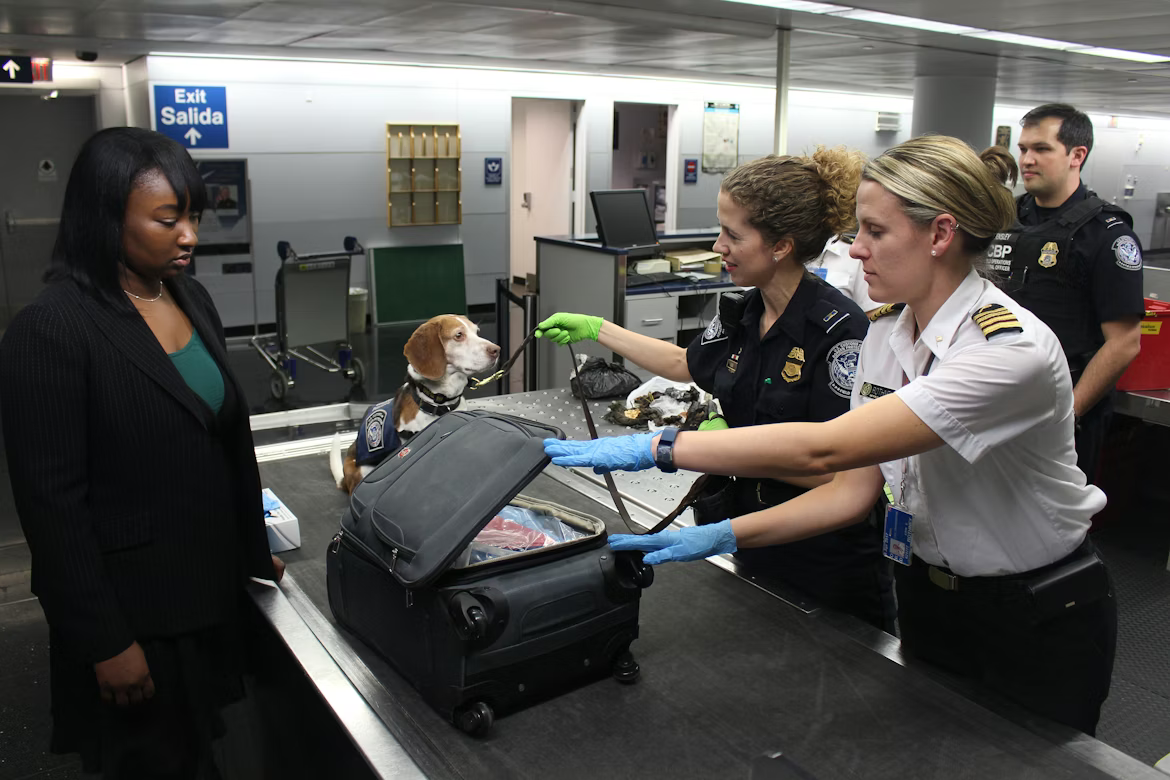
    Australia uses beagle detection dogs at baggage claim.

    Dogs sniff for:

    • Meat products
    • Fresh fruit
    • Seeds
    • Dairy

    If dog alerts to parents’ bag:

    Officer stops parents for inspection.

    This is NOT accusation.

    Dogs alert to trace amounts. Parents might not even have prohibited items.

    What to do:

    Stay calm. Let officer inspect. Cooperate fully.

    Compliance Mindset for Parents

    Tell parents:

    “Australian rules are very strict. Don’t risk fines.”

    “If you want to bring food, only factory-packaged items with English labels.”

    “When in doubt, declare. Declaring is free. Not declaring costs thousands.”

    Cultural adjustment:

    In Nepal, bringing home-cooked food or garden seeds is thoughtful gift.

    In Australia, it’s serious biosecurity violation.

    Different country, different rules.

    Parents must understand this before packing.

    After Clearing Biosecurity

    Officer stamps passenger card: “Cleared”

    Parents proceed to exit.

    This is final checkpoint.

    After this, parents are in arrivals hall where you’re waiting.

    Immigration questions parents are asked covers the previous checkpoint (immigration).

    Creating Pre-Packing Checklist for Parents

    Give parents this checklist 2 weeks before travel:

    ✅ SAFE TO PACK

    • Commercially packaged spices (sealed, labeled in English)
    • Tea bags in original box
    • Packaged biscuits/cookies
    • Instant noodles (check no meat ingredients)
    • Sealed chips/snacks
    • Tinned/canned foods with labels
    • Prescription medications (with doctor’s letter)
    • Clothing and textiles
    • Factory-made gifts
    • Books and electronics

    ❌ DO NOT PACK

    • Dried meat (sukuti, chatpate meat, any meat)
    • Seeds (any kind)
    • Fresh fruits or vegetables
    • Honey
    • Fresh eggs
    • Live plants or plant cuttings
    • Loose spices in plastic bags
    • Home-canned foods
    • Unlabeled traditional medicines
    • Wooden items with bark
    • More than $10,000 cash without declaring

    ⚠️ DECLARE IF BRINGING

    • Any food items
    • Wooden items
    • Traditional medicines
    • Cash over $10,000 AUD

    Emphasize: When in doubt, ASK. Better to leave questionable items in Nepal than face fines.

    Frequently Asked Questions

    Can parents bring Nepali pickles (achar)?

    Only if commercially packaged and preserved in oil or vinegar (not water-based). Homemade pickles in reused jars are prohibited. Declare all pickles at customs. Officer will determine if allowed. If officer says no, item confiscated but no fine if declared.

    What if parents don’t speak English and can’t read declaration card?

    Flight attendants usually help passengers fill cards. If not, parents can ask fellow Nepali passengers or show card to you via WhatsApp photo (fill it out remotely and tell them what to mark). Better yet, practice filling sample card before travel so parents recognize questions.

    Can fines be reduced if parents explain they didn’t know the rules?

    No. Fines are fixed. “I didn’t know” is not accepted defense. Parents are expected to check biosecurity rules before travel. Information available in multiple languages on Australian government websites. This is why pre-departure education is crucial.

    What happens if parents refuse to pay fine at airport?

    Fine goes to collections. Parents’ visa may be cancelled. Future visa applications will be denied or heavily scrutinized. Credit rating affected. Legal action possible. Never refuse to pay. If parents genuinely cannot pay immediately, talk to supervising officer about payment plan options.

    Can parents mail prohibited items to themselves in Australia instead of carrying?

    No. Same biosecurity rules apply to packages. Items will be seized by border control. Sender (in Nepal) and receiver (parents in Australia) both face penalties. Never attempt to mail prohibited items. Buy legal versions in Australia instead.

    What if biosecurity confiscates expensive traditional medicine?

    No compensation. Parents lose item and its value. This is why parents should: (1) Check if medicine ingredients are allowed, (2) Declare it, (3) Have prescriptions, (4) Only bring essential medicines, (5) Consider buying legal alternatives in Australia’s Ayurvedic shops.

    Do Australian biosecurity rules apply to transit passengers not leaving airport?

    If parents are only transiting through Australia (not entering, continuing to New Zealand for example), they stay in international area and don’t go through biosecurity. But if entering Australia (clearing immigration), full biosecurity inspection applies even if just visiting briefly.

  • What If Parents Miss a Connecting Flight

    What If Parents Miss a Connecting Flight

    Your parents’ flight from Kathmandu was delayed 2 hours.

    They land in Dubai with 20 minutes until their connecting flight to Sydney boards.

    No way they’ll make it.

    What happens now?

    This guide shows you exactly what airlines do when passengers miss connections and how to protect your parents.

    Airline Responsibility Depends on Booking Type

    The most important factor is whether both flights are on the same ticket.

    Same Ticket (Airline Responsible)

    Definition: Both flights booked together, single booking reference number (PNR).

    Example: Kathmandu-Dubai-Sydney all on one Qatar Airways ticket.

    What the airline must do:

    • Rebook parents on the next available flight (free)
    • Provide meal vouchers if the wait is 3+ hours
    • Provide a hotel if an overnight stay is required
    • All at the airline’s expense

    Parents don’t pay anything extra.

    Group flight booking from Nepal to Australia explains why booking everything together protects you.

    Separate Tickets (You’re Responsible)

    Definition: Two different bookings, different PNR numbers.

    Example: Budget airline Kathmandu-Dubai (one booking), separate Singapore Airlines Dubai-Sydney (different booking).

    What happens:

    • Parents miss the second flight = forfeit the entire ticket
    • No refund
    • Must buy a new ticket (often $2,000-3,000 last-minute)
    • No airline compensation

    This is why cheap separate bookings are dangerous.

    What Happens Step-by-Step When a Connection is Missed

    Scenario: Same ticket booking, first flight delayed, parents miss the connection.

    At the Transit Airport

    Step 1: Parents exit first flight

    The airline knows the connection was missed (computers track this automatically).

    Step 2: Airline representative meets parents at the gate or directs them to the transfer desk

    Usually, someone is waiting with a sign showing missed flight numbers.

    If no one is waiting, parents should go to the transfer desk immediately.

    Step 3: Transfer desk rebooking

    Staff access the passenger manifest and see a missed connection.

    Check the next available flight on the same route.

    Options airline considers:

    1. Next flight, same airline (preferred)
    2. Next flight partner airline
    3. The next day, if no same-day options

    Step 4: New boarding pass issued

    Free. No charges.

    Step 5: Compensation provided based on wait time

    • 2-3 hour wait: Access to lounge or meal voucher ($20-30)
    • 3-6 hour wait: Meal vouchers + lounge access
    • 6-8 hour wait: Meals + hotel day room
    • 8+ hours: Hotel overnight + meals + transport

    If booked on the same ticket, the airline rebooks on the next available flight at no cost. This protection doesn’t exist with separate bookings.

    If Overnight Stay Required

    Airline provides:

    • Hotel room (usually an airport hotel)
    • Dinner voucher
    • Breakfast voucher
    • Transport to/from the hotel
    • Confirmation of new flight time

    Parents should:

    • Keep all receipts (in case reimbursement is needed)
    • Get confirmation of the new flight in writing
    • Note the hotel name and address
    • Confirm pickup time for airport return

    How to book flights for elderly parents emphasizes single-ticket booking importance.

    Your Role When Parents Miss Connection

    Even though the airline handles logistics, you have responsibilities.

    Immediate Actions

    When you learn parents missed a connection:

    Step 1: Check flight status online

    Most airlines show rebooking automatically on the website.

    Step 2: Call airline customer service

    Confirm rebooking details. Get new flight information.

    Step 3: Contact parents

    WhatsApp or phone to confirm they’re safe, and know rebooking details.

    Step 4: Adjust pickup plans

    Change your airport pickup time to match the new arrival.

    Step 5: Inform parents’ accommodation if needed

    If parents booked a hotel for the first night, inform them of the delayed arrival.

    If Airline Not Helping

    Rare with legitimate carriers on same-ticket bookings, but happens.

    Escalation steps:

    Step 1: Ask for a supervisor at the transfer desk

    Politely but firmly request the manager.

    Step 2: Reference contract of carriage

    All airlines must honor same-ticket connections per their rules.

    Step 3: Document everything

    Take photos of boarding passes, transfer desk interactions, and any receipts.

    Step 4: File a complaint

    If parents end up paying anything they shouldn’t, file a formal complaint after arrival.

    Step 5: Credit card dispute

    If you paid for a ticket, dispute charges if the airline doesn’t fulfill obligations.

    Preventing Missed Connections

    The best strategy is to avoid tight connections.

    Book Adequate Connection Time

    Minimum vs Comfortable vs Safe:

    Airport Airline Minimum Comfortable Safe for the Elderly
    Dubai 90 minutes 3 hours 3-4 hours
    Doha 75 minutes 2.5 hours 3-4 hours
    Singapore 90 minutes 2.5 hours 3-4 hours

    Airline minimums are for young travelers who run.

    Elderly parents need buffer time.

    The transit guide for Dubai, Doha, and Singapore shows exact walking times and terminal layouts.

    Choose Better Routing

    Some routes have fewer connection risks.

    Lower risk:

    • Single connection (vs multiple)
    • Larger airports (more alternative flights)
    • Major airlines (more frequent flights to recover if missed)

    Higher risk:

    • Budget carrier first flight + different airline second flight
    • Airports with a single daily departure to the destination
    • Tight minimum connections

    Request Priority Assistance

    Wheelchair/mobility assistance passengers:

    • Board first
    • Deplane first
    • Priority through transit areas
    • Airport staff escorts quickly between gates

    Even if a parent can walk normally, requesting wheelchair assistance for tight connections speeds up transit significantly.

    Special assistance for elderly travellers covers priority transit procedures.

    Weather and Mechanical Delays

    Sometimes delays aren’t the airline’s fault.

    Weather Delays

    Airline obligations:

    • Still must rebook on the same ticket (connection protection applies)
    • May not provide hotel/meals for weather delays (depends on airline policy)
    • No compensation required (weather is “extraordinary circumstance”)

    Your options:

    • Accept next available flight (free)
    • Request a refund of the unused portion (partial refund)
    • Travel insurance may cover hotel costs

    Mechanical Delays

    Airline obligations:

    • Must rebook
    • Must provide meals/hotel (airline’s responsibility to maintain aircraft)
    • Some jurisdictions require compensation (EU rules for example)

    Better treatment than weather delays.

    Strike or Air Traffic Control Issues

    Usually treated like weather:

    • Rebooking yes
    • Compensation no
    • Meals/hotel depends on airline policy

    Parents Traveling Alone Considerations

    If parents don’t speak English and miss a connection, stress multiplies.

    Pre-Plan Communication

    Before travel, parents should have:

    • Your phone number written on paper (in wallet and carry-on)
    • Emergency contact card with:
      • Your name and number
      • Destination address
      • “Please help me contact my family” in English
    • Translation app on phone (Google Translate offline mode)

    You should have:

    • Parents’ flight details saved
    • Airline customer service numbers (saved in phone)
    • Ability to call parents (international calling enabled)

    Elderly Non-English Speakers

    What airline transfer desk does:

    • Use translation apps or phones
    • Call family (you) to translate
    • Provide written rebooking confirmation
    • Ensure parents understand hotel arrangements

    What you can do remotely:

    • Call the transfer desk directly (they’ll conference you with parents)
    • Translate airline instructions
    • Confirm parents understand the new plan
    • Arrange alternate pickup

    Insurance Coverage

    Travel insurance may cover costs associated with missed connections.

    What Insurance Usually Covers

    Trip delay coverage:

    • Meals during the delay
    • Accommodation if overnight
    • Replacement toiletries/clothing if baggage is unavailable

    Typically:

    • 6-12 hour delay required before coverage kicks in
    • $200-500 maximum per incident
    • Receipts required

    What insurance doesn’t cover:

    • New ticket purchase if on separate bookings (that’s your choice/risk)
    • Delays less than the minimum period
    • Delays you could have prevented (booking tight connections)

    When to Use Insurance

    Use if:

    • Airline not providing a hotel (weather delay)
    • Out-of-pocket expenses exceed $100
    • Extended delay (12+ hours)

    Don’t bother if:

    • Airline covering everything
    • Delay under insurance threshold
    • Claim value is less than the deductible

    If Parents Must Buy a New Ticket

    Worst case scenario: separate bookings, missed connection, must buy a new ticket.

    Minimize Cost

    Step 1: Check all airlines

    Last-minute tickets vary wildly between carriers.

    Step 2: Consider alternative routes

    Dubai-Sydney might be $3,000, but Dubai-Brisbane might be $2,200.

    Step 3: Check if the original ticket is refundable

    Sometimes can get taxes back ($100-200).

    Step 4: Use OTA

    We can access consolidator fares even at the last minute.

    Step 5: Ask about compassionate fares

    Some airlines offer reduced rates for genuine emergencies.

    Payment

    If you’re paying from Australia:

    • Use credit card (buyer protection)
    • Check foreign transaction fees
    • Consider a travel money card for better rates

    Learning from Mistakes

    If parents miss connection due to tight booking, learn for next time.

    Next booking:

    • Add 30-60 minutes buffer to connection
    • Book everything on single ticket
    • Request wheelchair assistance (speeds transit)
    • Choose routes with multiple daily flights (easier to rebook)

    The stress and potential cost of rebooking aren’t worth the $100 saved on tighter connection.

    Frequently Asked Questions

    Will airline hold connecting flight if first flight is delayed?

    Usually no. Airlines don’t hold flights for individual passengers. Exception: if many passengers from delayed flight are connecting and it’s the last flight of the day, airlines sometimes delay departure 10-15 minutes. Don’t count on it. Airlines prioritize on-time departure for passengers already boarded.

    How long does rebooking take at transfer desk?

    Usually 15-30 minutes if straightforward (next flight has seats, same airline). Can take 60+ minutes if need to rebook on partner airline, multiple passengers, or complicated routing. Transfer desks can get backed up if multiple flights delayed simultaneously. Stay calm and patient.

    Can we request specific rebooking flight or must we take what airline offers?

    You can request preferences (direct vs connecting, departure time, etc.) but airline not obligated to honor them. They must get you to destination on “next available flight with seats.” If you refuse offered rebooking to wait for better flight, you may forfeit rebooking rights and have to buy new ticket.

    What if parents’ luggage is on missed connecting flight?

    Luggage stays with original flight and arrives at destination. Airline tags it as “mishandled” and delivers to parents’ accommodation address usually within 24 hours. Parents receive toiletries kit and possibly compensation ($50-100) for delay. This is why essential items (medications, change of clothes) must be in carry-on.

    Does missing connection affect visa validity if parents lose travel days?

    No. Australian visitor visa validity is based on entry date, not booked flight date. If parents arrive 2 days late due to missed connection, their allowed stay period starts from actual arrival date. Entry date on visa is “recommended travel period,” not strict requirement. However, inform immigration if asked about delay.

    Can parents get compensation beyond rebooking?

    Depends on jurisdiction and cause of delay. European rules (EU261) require compensation for delays over 3 hours (€250-600) if within EU. No equivalent Australian or Middle Eastern rules. Some US rules apply. Generally, airlines only obligated to rebook, meals, and accommodation—not cash compensation unless specific regulations apply.

    Should we book travel insurance that covers missed connections?

    Yes, comprehensive travel insurance should include trip delay coverage. Covers meals, accommodation, essentials if airline doesn’t provide them (weather delays). Typical coverage: $200-500 per person after 6-12 hour delay. Won’t cover new ticket purchase on separate bookings, but helps with incidental costs. Worth $200-400 premium for 3-month coverage for elderly parents.

  • Transit Guide for Dubai, Doha, and Singapore Airports

    Transit Guide for Dubai, Doha, and Singapore Airports

    Your parents landed in Dubai.

    Now they have 4 hours to find their connecting gate, navigate security, and board the next flight.

    They don’t speak English. They’ve never been in an airport this massive. They’re terrified.

    This guide walks through exactly what happens at each major transit hub between Nepal and Australia.

    Step by step. Terminal by terminal.

    Dubai International Airport (DXB) Transit

    Second busiest airport in the world. 90 million passengers annually.

    Massive. Confusing. But manageable with preparation.

    Arriving at Dubai

    Your parents’ plane lands.

    Step 1: Follow signs for “Connections” or “Transit”

    Signs in English and Arabic. Look for airplane symbol with arrows.

    Do NOT follow “Exit” or “Immigration” signs. Those lead out of airport.

    Step 2: Security checkpoint

    All transit passengers go through security again.

    • Remove electronics from bag
    • Remove shoes (usually)
    • Walk through metal detector
    • Collect belongings

    Step 3: Check departure board

    Large screens showing flight numbers and gate assignments.

    Parents should look for their flight number (example: QF1 or EK412).

    Note gate number (example: B22).

    Step 4: Walk to gate

    Follow signs for appropriate concourse (A, B, or C).

    Dubai Terminal 3 Layout

    Most international connections use Terminal 3.

    Terminal 3 has 3 concourses:

    • Concourse A: Gates A1-A24 (15-20 minute walk from center)
    • Concourse B: Gates B1-B24 (central area)
    • Concourse C: Gates C1-C24 (15-20 minute walk from center)

    If parents need to change concourses:

    Free shuttle trains connect them. Follow signs for train.

    Walking distances:

    • Security to nearest gate: 5-10 minutes
    • Security to farthest gate: 20-30 minutes
    • Concourse A to Concourse C: 30-40 minutes with train

    Dubai transit can involve 15-25 minute walks between terminals. Request wheelchair assistance at booking for elderly parents.

    Transit, immigration and arrival in Australia covers complete transit process for Nepalese parents in Australia.

    Dubai Transit Services for Elderly

    Wheelchair assistance:

    If requested at booking, wheelchair waits at aircraft door.

    Staff escorts parents through security, to gate, and helps with boarding.

    Language help:

    Information desks throughout terminal. Staff usually speak Hindi/Urdu (similar enough to Nepali for basic communication).

    Prayer rooms:

    Available in all concourses. Clearly marked with symbols.

    Food options:

    Hundreds of restaurants and cafes. Vegetarian options widely available.

    Credit cards accepted everywhere.

    Rest areas:

    Quiet seating areas between gates. Some with charging stations.

    Dubai Common Problems

    Problem: Parents can’t find gate

    Solution: Show boarding pass to any airport staff. Point to gate number. They’ll direct or escort.

    Problem: Long security queue (30+ minutes)

    Solution: Tell security staff about tight connection. They sometimes allow priority processing.

    Problem: Gate changed after passing security

    Solution: Check departure boards every 20-30 minutes. Gate changes happen frequently.

    Doha Hamad International Airport (DOH) Transit

    Newer airport than Dubai. Opened 2014.

    Single terminal design = less confusing for first-time travelers.

    Arriving at Doha

    Step 1: Exit aircraft

    Follow other passengers to transit area. Clear signage in multiple languages.

    Step 2: Security screening

    • All passengers rescreened
    • Remove electronics
    • Walk through detector
    • Collect bags

    Step 3: Enter main terminal hall

    This is the central area. All gates accessible from here.

    Step 4: Check departure boards

    Look for flight number. Note gate.

    Step 5: Walk to gate

    Gates arranged in sections (A, B, C, D, E).

    All walkable. No trains needed.

    Doha Terminal Layout

    Single terminal with 5 concourses:

    • Concourse A: Gates A1-A10 (north end)
    • Concourse B: Gates B1-B32 (east side)
    • Concourse C: Gates C1-C16 (center)
    • Concourse D: Gates D1-D33 (west side)
    • Concourse E: Gates E1-E19 (south end)

    Walking times from security:

    • Nearest gates (C section): 5-10 minutes
    • Mid-range gates (B, D): 10-20 minutes
    • Farthest gates (A, E): 20-30 minutes

    Advantage: No trains or shuttles needed.

    Everything accessible by walking.

    Doha Transit Services

    Wheelchair assistance:

    Excellent service. Request at booking. Staff very professional.

    Meet and assist:

    Available for purchase (~$50) or free if parents have mobility issues.

    Dedicated staff escorts parents gate-to-gate.

    Language support:

    Limited. Mostly Arabic and English. Some Hindi-speaking staff at information desks.

    Facilities:

    • Prayer rooms
    • Quiet rest areas
    • Smoking rooms (if needed)
    • Duty-free shopping
    • Many restaurants (vegetarian available)

    Medical center:

    Full medical facility available 24/7. If parent feels unwell, staff can direct to medical center.

    Doha Common Problems

    Problem: Very long terminal (40-minute walk gate-to-gate)

    Solution: Request wheelchair assistance at booking. Even if parent can walk, saves energy for actual flight.

    Problem: Confusing gate numbering

    Solution: Airport app available (free WiFi). Shows current location and gate location.

    Singapore Changi Airport (SIN) Transit

    Best airport in world for elderly travelers.

    Infrastructure, cleanliness, and assistance services are exceptional.

    Singapore Changi handles over 5,000 mobility assistance requests daily, making it the most infrastructure-ready hub for Nepalese seniors.

    Arriving at Singapore

    Step 1: Follow “Transit” signs

    Very clear signage. Multiple languages including pictograms.

    Step 2: Check which terminal

    Singapore has 4 terminals. Most international flights use T1 or T3.

    Departure board shows:

    • Flight number
    • Gate number
    • Terminal number (if different from arrival terminal)

    Step 3: Security screening

    If staying in same terminal: usually no additional security.

    If changing terminals: security at new terminal.

    Step 4: Navigate to gate

    Within same terminal: 10-20 minute walk.

    Between terminals: use Skytrain (free, automated).

    Singapore Terminal Layout

    Terminal 1 (T1):

    • Gates: B1-D41
    • Long terminal (split into sections)
    • Skytrain connects to T2 and T3

    Terminal 2 (T2):

    • Gates: E1-F58
    • Connected to T1 and T3 by Skytrain

    Terminal 3 (T3):

    • Gates: A1-B20
    • Most modern terminal
    • Direct Skytrain to T1 and T2

    Terminal 4 (T4):

    • Separate terminal (budget airlines usually)
    • Free shuttle bus to other terminals

    Between Terminal Connections

    If parents need to change terminals:

    Example: Arrive T1, depart T3.

    Process:

    1. Exit arrival gate area
    2. Follow “Skytrain” signs
    3. Board automated train (comes every 2-3 minutes)
    4. Ride to destination terminal (2-5 minutes)
    5. Follow signs to gate section

    Skytrain is:

    • Free
    • Automated (no driver)
    • Wheelchair accessible
    • Easy to use

    Staff available at every station to help.

    Singapore Transit Services

    Wheelchair assistance:

    World-class. Requested at booking. Staff appears within 5 minutes of landing.

    Electric buggies available for distances over 200m.

    Meet and assist:

    Often included free for elderly passengers. Dedicated escort gate-to-gate.

    Language support:

    Some staff speak Hindi/Tamil. All speak English. Translation services available via phone app at information desks.

    Facilities:

    • Gardens (real plants and trees inside terminal)
    • Free WiFi (excellent speed)
    • Prayer rooms
    • Meditation rooms
    • Quiet zones
    • Showers (for long layovers)
    • Free movie theater (T2 and T3)
    • Butterfly garden (T3)

    Medical center:

    Full clinic with doctors and nurses. Free basic first aid. Can fill prescriptions.

    Food options:

    Hundreds of options. Many vegetarian. Affordable food courts ($5-10 meals).

    Singapore Common Problems

    Problem: Parents confused about which terminal

    Solution: Boarding pass clearly shows terminal. All signs show terminal number. Staff at every intersection to ask.

    Problem: Long layover (6+ hours)

    Solution: Free Singapore tour available (transit visa not needed for Nepalese for short tours). Or use rest zones, movie theater, gardens.

    Problem: Skytrain seems complicated

    Solution: It’s easier than it looks. Automated announcements. Clear signs. Staff at every station.

    Which Transit Airport Is Best for Elderly Parents?

    Singapore Changi: Best overall

    • Best assistance services
    • Clearest signage
    • Most elderly-friendly
    • Excellent medical facilities
    • Staff most helpful

    Doha Hamad: Second best

    • Modern, single terminal
    • No terminal changes needed
    • Good wheelchair service
    • Less crowded than Dubai

    Dubai DXB: Acceptable but challenging

    • Very large, easy to get lost
    • Long walking distances
    • Crowded and chaotic
    • But, assistance services are good if requested

    Recommendation:

    If price difference is small ($50-100), choose Singapore route.

    If price difference is large ($200+), Dubai or Doha acceptable with proper assistance requested.

    Special assistance for elderly travellers shows how to request services at all airports.

    Layover Duration Recommendations

    Minimum safe connection times:

    Airport Minimum Comfortable Ideal
    Dubai 90 min 3 hours 3-5 hours
    Doha 75 min 2.5 hours 3-4 hours
    Singapore 90 min 2.5 hours 3-5 hours

    For elderly parents, add 30-60 minutes to comfortable time.

    They move slower. Need more bathroom breaks. More easily confused.

    Too short: Risk missing connection.

    Too long: Exhausting to wait in airport.

    Sweet spot: 3-4 hours for most elderly travelers.

    Enough time to navigate without stress. Not so long they’re exhausted from waiting.

    Frequently Asked Questions

    Do parents need transit visa for Dubai, Doha, or Singapore?

    No. Nepalese passport holders get visa-free transit for short layovers: Dubai (up to 48 hours), Doha (unlimited in transit area), Singapore (up to 96 hours). Parents stay in international transit area and don’t go through immigration. No visa needed unless they want to leave airport and enter the city.

    What if parents miss connecting flight due to delay?

    If both flights on same booking (same ticket), airline responsible for rebooking on next available flight free. If separate bookings, parents must purchase new ticket themselves. This is why booking everything on one ticket through OTA is crucial. Request wheelchair assistance to speed up transit in tight connections.

    Can parents leave airport during long layover to rest at hotel?

    Technically yes with transit visa (Dubai requires visa to exit airport, Singapore allows 96-hour visa-free stay). However, not recommended for elderly non-English speakers. Adds immigration, customs, transport, and re-entry stress. Better to use airport rest zones or pay for airport transit hotel (Singapore has excellent transit hotels airside).

    What if parents get lost in transit and can’t find their gate?

    Every airport has information desks every 100-200 meters. Show boarding pass to any airport staff or fellow passenger. Most staff speak English and can direct. If desperate, call you via WhatsApp (free WiFi available at all three airports). You can help navigate via phone using airport maps online.

    Should parents eat airport food or bring their own during transit?

    Both. Airport food is safe and offers vegetarian options, but expensive ($10-20 per meal). Parents can bring packaged snacks from Nepal (dry foods, biscuits, nuts allowed). Fresh fruits/meats prohibited. Bring empty water bottle and fill after security (free water fountains available). This saves money and ensures familiar food available.

    How do parents know when to start walking to gate?

    Check departure board for boarding time (usually 30-45 minutes before flight). Start walking to gate 10-15 minutes before boarding time. For elderly parents with mobility issues, start 20-30 minutes before boarding. Better to arrive gate early and sit than rush and risk missing flight.

    What if wheelchair assistance doesn’t show up as requested?

    Ask at airline desk or information counter immediately. Show booking confirmation with assistance request. Airlines must provide service if pre-requested. Staff will call for wheelchair. Don’t proceed without assistance if parent needs it. If repeated issues, file complaint with airline after travel (may receive compensation).

  • Health & Comfort Tips for Parents Flying Long Distance

    Health & Comfort Tips for Parents Flying Long Distance

    Your mother’s feet swelled to twice their normal size on the flight.

    Your father’s blood pressure spiked from sitting 14 hours straight.

    Both arrived in Australia exhausted, dehydrated, and miserable.

    Long-haul flights are hard on everyone. For elderly parents, they can be dangerous without proper preparation.

    Here’s how to keep parents healthy and comfortable on 14+ hour journeys.

    Pre-Flight Medical Preparation

    Start preparing 2-4 weeks before travel.

    Doctor Visit (Mandatory)

    Book appointment with parents’ regular doctor.

    What doctor should check:

    • Blood pressure (must be controlled)
    • Blood sugar (for diabetics)
    • Heart function (especially if history of issues)
    • Lung capacity (COPD, asthma patients)
    • Recent surgeries (need clearance to fly)
    • Medication interactions with travel

    Get written clearance letter stating:

    • Patient is fit to fly long-distance
    • List of all current medications
    • Special needs (oxygen, etc.)
    • Emergency contact for family physician

    Airlines can request this at check-in for elderly passengers.

    Medical emergencies can cost $10,000-$50,000 without insurance for elderly visitors to Australia.

    Booking flights for parents visiting Australia covers complete medical preparation checklist.

    Medication Planning

    Two-week supply minimum (even for 3-month visit).

    If luggage gets lost, parents have backup.

    What to pack in carry-on:

    • All regular medications (original containers)
    • Prescription copies or doctor’s letter
    • Over-the-counter medications:
      • Pain relievers (paracetamol, ibuprofen)
      • Anti-diarrhea (loperamide)
      • Antacids
      • Motion sickness pills
      • Sleep aids (if doctor approves)

    Liquid medications:

    • Allowed in carry-on over 100ml with doctor’s note
    • Keep in clear plastic bag
    • Declare at security

    Never pack essential medications in checked luggage.

    Checked bags get lost. Parents need access during flight.

    Deep Vein Thrombosis (DVT) Prevention

    DVT is blood clots in legs from prolonged sitting.

    Elderly are at higher risk.

    Symptoms:

    • Leg pain or swelling
    • Red/warm skin on leg
    • Can be fatal if clot travels to lungs

    Prevention strategies:

    Compression Socks (Essential)

    Buy medical-grade compression socks before flight.

    Not regular socks. Compression socks.

    Available at pharmacies. Look for:

    • Knee-high length
    • 15-20 mmHg compression (medium)
    • Comfortable fit (not too tight)

    How to wear:

    • Put on before flight
    • Wear entire journey (check-in to arrival)
    • Remove after landing and walking around

    Cost: $15-30 per pair.

    Worth every cent. DVT treatment costs thousands and can be life-threatening.

    In-Flight Movement

    Every 60-90 minutes:

    • Stand up
    • Walk to bathroom (even if don’t need to go)
    • Stretch in aisle
    • Do calf raises (up on toes, down, repeat 10 times)

    While seated:

    • Ankle circles (10 each direction, every 30 minutes)
    • Flex and point toes
    • Lift knees toward chest
    • Squeeze buttocks

    Set phone alarm for hourly movement reminders.

    Hydration

    Dehydration increases DVT risk.

    Drink:

    • 250ml water every hour (roughly)
    • Avoid excessive tea/coffee (dehydrating)
    • Accept all beverages crew offers

    Yes, this means frequent bathroom trips.

    That’s better than DVT.

    Staying Hydrated

    Airplane cabin air is extremely dry (10-20% humidity).

    Effects of dehydration:

    • Headaches
    • Fatigue
    • Dizziness
    • Constipation
    • Dry skin and eyes
    • Blood pressure changes

    Hydration strategy:

    Before flight:

    • Drink 500ml water 2 hours before airport
    • Avoid alcohol day before travel

    During flight:

    • Ask for water every time crew passes
    • Bring empty water bottle, fill after security
    • Aim for 200-300ml per hour
    • Don’t wait until thirsty (dehydration already started)

    After landing:

    • Drink 500ml water immediately
    • Continue high water intake first 24 hours

    Signs parent needs more water:

    • Dark yellow urine
    • Dry lips/mouth
    • Headache
    • Confusion or irritability

    Managing Diabetes on Long Flights

    Diabetic parents need extra planning.

    Blood Sugar Monitoring

    Pack in carry-on:

    • Blood glucose meter
    • Extra test strips
    • Lancets
    • Fast-acting glucose (tablets, juice)
    • Snacks (for low blood sugar)

    Testing schedule:

    • Before flight
    • Every 3-4 hours during flight
    • After landing

    Time zone changes affect blood sugar. Monitor closely.

    Meal Timing

    Request diabetic meal at booking (DBML code).

    Airline diabetic meals are:

    • Lower sugar
    • Controlled carbohydrates
    • Regular portions

    Bring backup snacks:

    • Nuts (protein, slow energy)
    • Cheese
    • Whole grain crackers
    • Fresh fruit (check customs rules)

    Never skip meals to avoid bathroom trips.

    Blood sugar crashes are more dangerous than inconvenience of airplane toilets.

    Insulin Management

    If parent takes insulin:

    • Keep in carry-on (never checked)
    • Bring double amount needed
    • Include doctor’s letter
    • Declare at security

    Storage:

    • Insulin okay at cabin temperature (not in overhead bin in summer)
    • Can ask crew to refrigerate if needed
    • Have insulated case

    Time zone adjustments:

    Consult doctor before travel about insulin timing across time zones.

    Don’t guess. Get professional medical advice.

    Sleep Strategies

    Elderly parents often struggle to sleep on planes.

    Before Flight

    Day before travel:

    • Go to bed slightly earlier
    • Avoid heavy meals late evening
    • No caffeine after 2pm
    • Light exercise (walking)

    Don’t exhaust yourself trying to sleep the night before. Moderate rest is better than none.

    During Flight

    Sleep aids (with doctor approval):

    • Melatonin (3-5mg, 30 minutes before desired sleep)
    • Prescription sleep medication (if doctor recommends)
    • Antihistamines (some cause drowsiness)

    Never try new sleep medications for first time on flight.

    Test at home first. Know how your parent reacts.

    Comfort items:

    • Neck pillow (U-shaped, inflatable or memory foam)
    • Eye mask (blocks cabin lights)
    • Earplugs or noise-canceling headphones
    • Light blanket (airlines provide, but bring own if preferred)
    • Comfortable clothing (loose-fitting)

    Sleep timing:

    Try to sleep during destination nighttime (helps with jet lag).

    Example: Flying to Australia, sleep during Australian nighttime hours even if body feels awake.

    Managing Constipation

    Common elderly issue, worse on flights.

    Causes:

    • Dehydration
    • Sitting for long periods
    • Dietary changes
    • Time zone disruption
    • Stress

    Prevention:

    • High water intake
    • Eat fiber (fruits, vegetables at airport/plane)
    • Walk frequently during flight
    • Take gentle laxative if prone to constipation (doctor approval)

    Bring:

    • Fiber supplements
    • Gentle laxative (senna, milk of magnesia)
    • Prune juice (small container, if allowed)

    After arrival:

    Continue high fiber and water intake for first few days.

    Constipation can take 2-3 days to resolve.

    Ear Pressure and Hearing Issues

    Many elderly have reduced ear pressure equalization.

    Symptoms:

    • Ear pain during descent
    • Temporary hearing loss
    • Dizziness
    • Ringing in ears

    Prevention:

    During takeoff and landing:

    • Swallow frequently (sip water)
    • Chew gum
    • Yawn
    • Hold nose and gently blow (Valsalva maneuver)
    • Use filtered earplugs (Ear Planes brand works well)

    Don’t fly with:

    • Active ear infection
    • Severe cold/congestion
    • Recent ear surgery

    If parent has hearing aids:

    • Keep in during flight
    • Carry extra batteries
    • Have backup plan if they malfunction

    Swelling (Edema) Management

    Feet and ankles commonly swell on long flights.

    Why it happens:

    • Sitting long periods
    • Cabin pressure changes
    • Dehydration
    • Reduced circulation

    Prevention:

    • Compression socks (mentioned earlier)
    • Elevate feet when possible
    • Wiggle toes frequently
    • Don’t cross legs
    • Remove shoes during flight (put back on before landing)

    After landing:

    • Walk around
    • Elevate legs when resting
    • Massage feet gently
    • Swelling should resolve in 12-24 hours

    Seek medical help if:

    • Swelling doesn’t resolve in 24 hours
    • One leg much more swollen than other (DVT risk)
    • Pain, redness, or warmth in swollen area

    Clothing Choices

    What parents wear affects comfort significantly.

    Best clothing:

    Layers:

    • Light base layer
    • Sweater or cardigan
    • Jacket (cabin temperature varies)

    Loose-fitting:

    • Elastic waistband
    • Comfortable shoes (slip-on, easy to remove)
    • No tight clothing (restricts circulation)

    Materials:

    • Natural fibers (cotton, wool)
    • Breathable fabrics
    • Avoid synthetic (doesn’t breathe, uncomfortable)

    Footwear:

    • Comfortable walking shoes
    • Slip-on style (easy for security, bathroom)
    • Compression socks underneath
    • Slightly larger size (feet swell during flight)

    Avoid:

    • Tight jeans
    • Belts (uncomfortable sitting)
    • Formal shoes (hard to remove)
    • New shoes (blisters)

    Food and Nutrition

    At airport before flight:

    • Light meal (not too heavy)
    • Avoid gas-producing foods (beans, cabbage, carbonated drinks)
    • No excessive salt (increases swelling)

    During flight:

    • Accept meals offered (maintains schedule)
    • Eat slowly
    • Don’t overeat (uncomfortable when sitting)
    • Choose fish or chicken over red meat (easier to digest)
    • Fresh fruit and vegetables when available

    Bring snacks:

    • Trail mix (nuts, dried fruit)
    • Granola bars
    • Crackers
    • Fresh fruit (check customs rules)

    Avoid:

    • Alcohol (dehydrating)
    • Excessive caffeine
    • Very spicy food (can upset stomach)
    • Carbonated drinks (bloating)

    Jet Lag Minimization

    Crossing 8-10 time zones is brutal for elderly.

    Before travel:

    • Shift sleep schedule gradually (15-30 minutes per day)
    • If flying east (to Australia), go to bed earlier each night
    • Start 3-4 days before departure

    During flight:

    • Set watch to destination time immediately
    • Sleep/wake according to destination time
    • Avoid napping if it’s daytime at destination

    After arrival:

    • Get sunlight exposure (helps reset circadian rhythm)
    • Stay awake until destination bedtime (even if exhausted)
    • Light exercise (walking)
    • Melatonin at destination bedtime (if doctor approves)

    First 2-3 days:

    • Expect fatigue and confusion
    • Allow parents extra rest
    • Don’t schedule important activities
    • Gradual adjustment is normal

    Health and comfort tips for parents flying long distance (this article) is your complete resource.

    Frequently Asked Questions

    Can elderly parents with heart conditions safely fly long-distance?

    Most can with doctor clearance. Controlled heart conditions (stable blood pressure, no recent events) are usually fine. Doctor must confirm fitness to fly. Parents should carry all cardiac medications, nitroglycerin if prescribed, and medical history summary. Inform airline at booking about heart condition for potential emergency preparedness.

    How much water should elderly parents drink during 14-hour flight?

    Aim for 200-300ml per hour, approximately 2.5-3 liters total for 14-hour flight. This is more than normal daily intake, but cabin air is very dry. Dark urine indicates dehydration. Better to make frequent bathroom trips than risk dehydration complications (headache, dizziness, blood pressure changes).

    Should parents take sleeping pills for long overnight flights?

    Only with doctor approval. Never try new sleep medication for first time on flight. Test at home first. Natural options like melatonin (3-5mg) are safer for elderly. Avoid strong sedatives that could cause confusion, falls, or interaction with other medications. Light sleep aids better than heavy sedation for elderly.

    What should parents do if they feel chest pain during flight?

    Inform flight attendants immediately. Airlines carry oxygen and emergency medical equipment. Flight attendants trained in first aid. Crew will assess severity and may contact ground medical support via radio. Keep cardiac medications (nitroglycerin, aspirin) accessible in seat pocket. For serious cardiac events, plane can divert to nearest airport.

    Can diabetic parents safely manage insulin and blood sugar on flights?

    Yes, with planning. Carry all supplies in carry-on (meter, strips, insulin, snacks). Test blood sugar every 3-4 hours during flight. Time zone changes affect insulin timing—consult doctor before travel for schedule. Request diabetic meal (DBML) at booking. Bring fast-acting glucose for emergencies. Inform crew about diabetes at boarding.

    How do parents prevent swollen feet and ankles on long flights?

    Wear compression socks (15-20 mmHg) for entire journey. Move/walk every 60-90 minutes. Do ankle circles and calf exercises while seated. Stay well-hydrated. Elevate feet when possible. Remove shoes during flight (but wear socks). Avoid crossing legs. Swelling should resolve within 12-24 hours after landing. If persists or one leg significantly more swollen, see doctor (potential DVT).

    What if parents have difficulty getting up to use bathroom during flight?

    Request aisle seat at booking (essential). Inform flight attendants at boarding that parent has mobility issues. Crew can assist with walking to lavatory and waiting nearby. Consider requesting wheelchair service for in-flight assistance. Some aircraft have wider accessible lavatories. Parents should use bathroom regularly (every 2-3 hours) rather than waiting until urgent.

  • Seat Selection Tips for Long-Haul Elderly Travel

    Seat Selection Tips for Long-Haul Elderly Travel

    Your father sat in a middle seat for 14 hours.

    Between two strangers. No easy bathroom access. Couldn’t stretch his legs. Arrived in Australia exhausted and miserable.

    Seat selection isn’t a luxury for elderly parents.

    It’s a necessity.

    The right seat makes a 14-hour flight bearable. The wrong seat makes it torture.

    Why Seat Selection Matters More for Elderly

    Young travelers can tolerate bad seats.

    Elderly travelers cannot.

    Physical issues on long flights:

    • Deep vein thrombosis (DVT) risk increases with age
    • Bladder capacity decreases (more frequent bathroom trips)
    • Joint stiffness from sitting
    • Circulation problems
    • Back pain from poor posture
    • Difficulty sleeping in upright position

    The right seat helps with:

    • Easy bathroom access (aisle)
    • Leg stretching room (bulkhead, exit vicinity)
    • Less walking to/from seat (front of cabin)
    • Ability to recline properly (not last row)
    • Comfort during sleep attempts

    Up to 10% of elderly travelers fail to board because they lack proper assistance planning, including appropriate seat selection for their medical conditions.

    How to book flights for elderly parents covers complete booking strategy including seating.

    Best Seat Locations for Elderly Parents

    Aisle Seats (Absolute Priority)

    Non-negotiable for elderly travelers.

    Why aisle is essential:

    • Bathroom access without disturbing others (elderly need bathroom 5-8 times on long flights)
    • Can stand up to stretch (prevents DVT, reduces stiffness)
    • Less claustrophobic
    • Can reach overhead bin without help
    • Exit faster when deplaning

    Which aisle:

    On wide-body aircraft (most international flights), there are 2-3 aisles.

    Best aisles in order:

    1. Left or right outer aisle (window-aisle-aisle configuration)
      • Only one seat to cross to reach aisle
      • Usually quieter than center section
    2. Center section aisle (middle-aisle-middle configuration)
      • If outer aisles unavailable
      • Two seat neighbors instead of one

    Never book middle seats for elderly parents.

    Middle = trapped. Disturbing two people every bathroom trip.

    Bulkhead Rows (Extra Legroom)

    Bulkhead = first row of each cabin section. Wall in front instead of seats.

    Advantages:

    • 3-6 inches extra legroom
    • No one reclining into your space
    • Can stretch legs forward
    • More room to stand/move
    • Easier to get up from seat

    Disadvantages:

    • Armrests don’t lift (built-in tray table)
    • No under-seat storage (carry-on must go overhead during takeoff/landing)
    • Sometimes near bathrooms (noise, odor, traffic)
    • Can be colder (near galley)

    Best for:

    Parents who need legroom and don’t mind trade-offs.

    Avoid if:

    Parent struggles with overhead bin access or wants to keep bag at feet.

    Front of Cabin (Rows 5-15)

    Why front is better:

    • First off plane (less standing/waiting)
    • Less walking to exit
    • Smoother ride (less turbulence)
    • Quieter (away from engines and galleys)
    • Better air circulation

    Distance matters:

    • Row 10 to exit: 50-100m walk
    • Row 45 to exit: 150-300m walk

    For elderly with mobility issues, this difference is significant.

    Premium economy consideration:

    Front of economy cabin often overlaps with premium economy.

    Upgrade to premium ($300-600 extra) gets:

    • More legroom (5-7 inches)
    • Wider seats (2-3 inches)
    • Better recline
    • Usually rows 5-12 (front cabin)

    For elderly parents on 14+ hour flights, premium economy is worth considering.

    Exit Row Seats (Avoid for Elderly)

    Airlines prohibit or restrict exit row seating for elderly passengers.

    Why:

    • Must be able to operate emergency exit (50+ pounds)
    • Must be able to assist in evacuation
    • Must follow crew instructions in English
    • Must be physically capable

    Age limits vary:

    • Some airlines: No passengers over 60 in exit rows
    • Others: No passengers over 65
    • Many: Discretion of crew (they can deny elderly passengers)

    Don’t book exit rows for parents over 60.

    Even if allowed to book online, crew can reassign at gate. Not worth the risk.

    Worst Seats for Elderly (Avoid These)

    Middle Seats

    Why terrible:

    • Trapped between two people
    • Bathroom access requires disturbing both neighbors
    • Can’t stand easily
    • Feels claustrophobic
    • No control over space

    How to avoid:

    • Pay for seat selection ($30-80 per segment)
    • Book early when aisle seats available
    • Check seat map 24 hours before flight (sometimes opens up)

    Last Row of Section

    Problems:

    • Seats don’t recline (or recline very little)
    • Right in front of bathroom (smell, noise, constant traffic)
    • Near galley (crew conversations, meal prep noise)
    • Last to deplane
    • Vibration from back of aircraft

    How to identify:

    • Look at seat map
    • Last row before bathroom/galley
    • Usually marked as “limited recline”

    Seats Near Bathrooms (Unless Strategic)

    Rows immediately next to lavatories:

    Negatives:

    • Constant foot traffic
    • People queueing near your seat
    • Bathroom odor
    • Door noise
    • Light from bathroom door opening

    Exception:

    Aisle seat 2-3 rows from bathroom can be strategic.

    Close enough for quick access. Far enough to avoid worst problems.

    Seat Selection Strategy by Route

    Different aircraft have different configurations.

    Kathmandu to Singapore (Medium-haul, 4.5 hours)

    Best seats:

    • Rows 15-25, aisle
    • Economy is fine (short enough duration)
    • Window acceptable if parent rarely uses bathroom

    Avoid:

    • Last 5 rows (near toilet)
    • Exit rows (not allowed)

    Singapore to Sydney/Melbourne (Long-haul, 7-8 hours)

    Best seats:

    • Premium economy if budget allows (rows 10-15 usually)
    • Economy rows 15-25, aisle, outer section
    • Bulkhead if parent needs legroom

    Avoid:

    • Middle seats
    • Back half of plane (rows 35+)
    • Seats near galleys

    This is the longest single segment. Seat comfort matters most here.

    Dubai to Sydney (Ultra long-haul, 13-14 hours)

    Best seats:

    • Premium economy strongly recommended (age 65+)
    • Economy: Bulkhead rows, aisle only
    • Rows 15-20 ideal

    Avoid:

    • Regular economy middle or window for elderly
    • Back of plane
    • Seats that don’t recline

    At 14 hours, this is brutal in regular economy middle seat.

    If premium economy not affordable, consider:

    • Extra legroom economy seats (+$80-150)
    • Bulkhead seats
    • Breaking journey with longer Singapore layover (rest in airport hotel)

    Seats for Parents Traveling Together

    Couples have different optimal seating.

    Both Parents Need Aisle Access

    Best configuration:

    On 3-3-3 aircraft:

    • Book 2 aisle seats across from each other
    • Example: Seats 15C and 15H (aisle seats, across aisle from each other)
    • Can see each other, chat across aisle
    • Both have aisle access

    On 2-4-2 aircraft:

    • Book aisle seats in adjacent rows
    • Example: 15C and 16C (aisle, one row apart)

    On 2-3-2 aircraft:

    • Book 2-seat section, both aisle and window
    • Example: 15A and 15B (only 2 seats in row)

    One Parent Needs Aisle, Other Okay with Window

    Best configuration:

    • Book aisle + window in 2-seat section
    • Leave middle empty (often stays empty)
    • If middle fills, offer to switch so couple sits together
    • Both get decent seats

    Parents Who Want to Sit Side-by-Side

    Compromise:

    • Book aisle + middle in 3-seat row
    • Parent who needs bathroom less takes middle
    • Still have access to aisle through middle seat

    Not ideal, but better than:

    • Both in middle seats
    • Separated far apart
    • Window + middle (trapped)

    Booking flights for parents visiting Australia explains couple seating strategies.

    When to Select Seats

    At booking (best):

    • Full choice of available seats
    • Can see entire seat map
    • Time to research aircraft layout
    • No rush decisions

    24-48 hours before flight (okay):

    • Some seats open up as airline finalizes
    • Can grab better seats if they appear
    • Still time to request changes

    At check-in (too late):

    • Limited to leftover seats
    • Often only middle seats remain
    • No time to research
    • Might get stuck in terrible seats

    Pay for seat selection at booking time.

    $30-80 per flight segment is tiny compared to total cost.

    Ensures parents get appropriate seats.

    How to Check Aircraft Seat Maps

    Not all seats are equal even in same cabin.

    Tools to research:

    SeatGuru.com:

    • Shows seat maps for specific aircraft
    • Marks good seats (green)
    • Marks bad seats (yellow/red)
    • Explains why each seat is good/bad

    Airline website:

    • When booking, click “seat selection”
    • Zoom in on seat map
    • Look for bathroom locations, galleys, exit rows

    How to use:

    1. Get booking confirmation with flight numbers
    2. Look up flight number on SeatGuru
    3. Find your aircraft type (e.g., “Boeing 777-300”)
    4. Study seat map
    5. Identify best available seats
    6. Call airline or OTA to request those specific seats

    Special Considerations

    Medical Conditions

    Diabetes:

    • Aisle essential (frequent bathroom, blood sugar monitoring)
    • Avoid seats near galley (harder to get crew attention for emergency)

    Heart conditions:

    • Front of cabin (easier evacuation if needed)
    • Premium economy (less strain from cramped position)

    Arthritis:

    • Bulkhead or extra legroom (can stretch)
    • Aisle (can stand frequently)

    Wheelchair users:

    • Bulkhead sometimes mandatory (wheelchair storage)
    • Crew seats folded for wheelchair transfer

    Obesity

    Some elderly parents are overweight.

    Seat considerations:

    • Aisle (armrest sometimes raises for easier access)
    • Avoid 3-seat middle (cramped for neighbor too)
    • Consider premium economy (wider seats)
    • Some airlines offer seatbelt extenders (request at boarding)

    Airlines can require purchase of second seat if parent cannot fit in one seat with armrests down.

    Better to upgrade to premium economy than pay for second economy seat.

    Frequently Asked Questions

    Should I pay extra for seat selection or let airline assign seats automatically?

    Always pay for seat selection when booking for elderly parents. Automatic assignment often gives middle seats at back of plane. $30-80 per flight to guarantee aisle seat in front half of cabin is worthwhile. Free seat selection during check-in usually means only bad seats remain.

    Can I request seat changes after booking if better seats become available?

    Yes. Check seat map again 7 days before flight, then 24 hours before. Airlines release held seats at these times. Call OTA or airline to request better seats if available. Most airlines allow free seat changes up to 24 hours before departure.

    What if my parents are assigned separate seats far apart?

    Contact airline immediately after booking. Explain both are elderly and need to sit together. Airlines usually accommodate if requested early. If not resolved, arrive at airport extra early (4+ hours) and request at check-in. Gate agents can sometimes reassign seats.

    Are bulkhead seats worth the extra cost for elderly parents?

    Yes, if parent has leg/knee problems or is tall (over 5’10”). Extra legroom (3-6 inches) makes huge difference on 8-14 hour flights. However, if parent needs to keep medications/items at feet during flight, regular aisle seat with under-seat storage is better.

    Can elderly parents use bassinet rows (usually bulkhead)?

    No. Bassinet rows are reserved for passengers traveling with infants. Airlines won’t assign elderly passengers to these rows even if no infants on flight. Choose non-bassinet bulkhead rows (airlines usually have 2-3 bulkhead rows per cabin section).

    What’s the best seat for elderly parent who gets airsick?

    Front of cabin (rows 10-20), over the wing if possible (most stable). Avoid back of plane (more turbulence). Window seat can help (visual horizon reference), but aisle more important if nausea leads to bathroom needs. Consider aisle seat in rows 12-18 (front-center of aircraft).

    Should elderly parents sit near emergency exits for faster evacuation?

    No. Airlines prohibit elderly in actual exit rows. Sitting near (but not in) exit rows doesn’t help in emergency—crew directs evacuation, not seat location. Better to prioritize comfort (aisle, front of cabin) than worry about emergency proximity.

  • Special Assistance & Wheelchair Requests Explained

    Special Assistance & Wheelchair Requests Explained

    Your mother can walk around the house fine.

    But ask her to walk 30 minutes through an airport terminal, climb stairs to a plane, and navigate three different gates?

    That’s different.

    Special assistance services exist for exactly this reason. They’re free. They’re professional. They make travel possible for elderly parents who couldn’t manage alone.

    Here’s everything you need to know.

    Why Special Assistance Matters

    Airports aren’t designed for elderly people.

    Typical Nepal to Australia journey challenges:

    • Kathmandu airport: 200-400m walk from check-in to gate
    • Dubai airport: 15-25 minute walk between terminals
    • Singapore airport: 10-30 minute walk (sometimes train between terminals)
    • Sydney airport: 10-20 minute walk from gate to immigration

    Total walking: 2-4 kilometers over 20+ hours of travel.

    For an elderly person with arthritis, diabetes, or just general fatigue, this is impossible.

    Wheelchair assistance makes it manageable.

    Global demand for airport special assistance (wheelchairs/mobility) has seen a sharp rise, with some regions reporting requests growing to nearly 2% of all passengers in 2024.

    Booking flights for parents visiting Australia explains why elderly parents need this service.

    Types of Wheelchair Service

    Airlines use specific codes. Knowing them ensures you request the right service.

    WCHR (Wheelchair – Ramp)

    What it means:

    • Can walk short distances (up to 50m)
    • Can climb stairs with assistance or handrail
    • Needs wheelchair for long airport distances

    Best for:

    • Parents who are generally mobile but tire easily
    • Those with mild arthritis or joint pain
    • Anyone over 70 (airports are exhausting)

    What service provides:

    • Wheelchair from check-in to gate
    • Assistance through security
    • Wheelchair from arrival gate to baggage claim
    • Help with immigration queues (sometimes priority lanes)

    Parents walk to their seat on plane. Wheelchair isn’t taken on aircraft.

    WCHS (Wheelchair – Steps)

    What it means:

    • Can walk very short distances (under 10m)
    • Cannot climb stairs at all
    • Needs wheelchair and ramp/lift access to aircraft

    Best for:

    • Parents with significant mobility issues
    • Those using cane or walker normally
    • Knee/hip replacement recovery
    • Severe arthritis

    What service provides:

    • Wheelchair from check-in to aircraft door
    • Staff assists boarding via ramp or lift (not stairs)
    • Wheelchair from aircraft door to baggage claim
    • Priority boarding and deplaning

    Parents walk short distance to seat with support. Staff helps but doesn’t carry.

    WCHC (Wheelchair – Cabin)

    What it means:

    • Cannot walk at all
    • Needs wheelchair from curb to aircraft seat
    • Full mobility assistance required

    Best for:

    • Paralyzed or severely disabled passengers
    • Post-surgery recovery (major operations)
    • Complete immobility

    What service provides:

    • Wheelchair everywhere
    • Staff lifts/carries passenger to aircraft seat
    • Special aisle chair (narrow wheelchair for aircraft aisle)
    • Complete boarding/deplaning assistance
    • Help with lavatory if needed (with special equipment)

    This is most comprehensive service. Only request if parent truly cannot walk at all.

    How to Request Special Assistance

    Timing matters. Airlines allocate limited assistance staff per flight.

    When to request:

    At booking time (best):

    • Guaranteed availability
    • Staff pre-assigned
    • Appears on ticket/reservation
    • No last-minute stress

    48-72 hours before flight (minimum):

    • Usually still available
    • Might be waitlisted on full flights
    • Requires calling airline directly

    At check-in (too late):

    • Often unavailable
    • Might be refused if staff fully allocated
    • Causes delays and stress

    How to request through OTA:

    1. Tell OTA at time of booking
    2. Specify which type (WCHR, WCHS, or WCHC)
    3. Note any other needs (oxygen, medical equipment)
    4. Confirm it’s on booking confirmation

    How to request through airline directly:

    1. Call airline customer service (have booking reference ready)
    2. Request “special assistance” or “wheelchair service”
    3. Specify code (WCHR, WCHS, or WCHC)
    4. Get confirmation number for assistance request
    5. Reconfirm 48 hours before flight

    How to book flights for elderly parents shows exactly when to request assistance.

    Meet and Assist Service

    Wheelchair assistance is one thing. Meet and assist is another level.

    What is meet and assist:

    Dedicated airline staff member meets passenger at check-in and:

    • Escorts through entire airport process
    • Helps with check-in and baggage
    • Navigates security
    • Finds gate
    • Assists with boarding
    • At destination: escorts through immigration, baggage claim, customs
    • Delivers passenger to family waiting area

    This is the premium service for elderly non-English speakers.

    Cost:

    Some airlines include this free with special assistance.

    Others charge:

    • Emirates: ~$30-50 per airport
    • Qatar Airways: ~$40-60 per airport
    • Singapore Airlines: Often free for elderly passengers

    Worth it?

    Absolutely, if parents don’t speak English and have never traveled internationally.

    The staff member becomes their guide for the entire airport experience.

    What Happens at Each Airport

    Every airport handles assistance differently.

    Kathmandu (Tribhuvan International)

    Check-in:

    • Request wheelchair at counter (even if pre-booked, remind them)
    • Staff brings wheelchair within 10-15 minutes
    • Fast-track through security

    Departure:

    • Wheelchair to gate
    • Priority boarding (usually board first)
    • Staff helps stow carry-on

    Immigration:

    • Sometimes separate assistance line (faster)
    • Staff helps fill forms if needed

    Dubai (DXB)

    Arrival:

    • Wheelchair waiting at aircraft door
    • Fast-track through transit security
    • Golf cart transport available (request at booking)
    • Staff navigates to connecting gate

    Facilities:

    • Accessible bathrooms
    • Prayer rooms
    • Medical center (if needed)

    Transit assistance is excellent here. Staff experienced with elderly travelers.

    Singapore (Changi)

    Best assistance infrastructure globally.

    Singapore Changi handles over 5,000 mobility assistance requests daily.

    Arrival:

    • Wheelchair at gate immediately
    • Multiple staff members (never waiting)
    • Buggy carts for longer distances (Terminal 1 to Terminal 3)

    Facilities:

    • Medical centers on every level
    • Accessible bathrooms everywhere
    • Quiet rest areas
    • Pharmacy (if parents need medication)

    Staff speaks multiple languages. Some speak Hindi (close enough for basic communication with Nepali speakers).

    Sydney/Melbourne/Brisbane

    Arrival:

    • Wheelchair at aircraft door
    • Priority immigration lane (usually)
    • Fast-track through to baggage claim
    • Staff can help with customs declarations

    Baggage:

    • Staff waits with passenger at carousel
    • Helps identify and collect luggage
    • Pushes cart to customs

    After customs:

    • Staff escorts to arrivals hall
    • Helps find family
    • Waits until family confirms pickup

    Immigration questions parents are asked explains what happens at Australian immigration with assistance.

    What to Pack for Assisted Travel

    Even with assistance, parents should carry essentials.

    In carry-on bag:

    • Medications (all of them)
    • Doctor’s letter listing medications
    • Snacks (for energy during long waits)
    • Water bottle (empty, fill after security)
    • Phone and charger
    • Your contact details (printed on paper)
    • Passport and visa documents (in folder)
    • Compression socks (for circulation)
    • Small pillow or neck support

    On person (don’t pack):

    • Passport
    • Boarding pass
    • Cash (small amount, $50-100)
    • Reading glasses
    • Any critical medication for next 24 hours

    Assistance staff can’t carry bags and push wheelchair simultaneously. Pack light.

    Common Assistance Problems and Solutions

    Problem: Wheelchair didn’t show up at gate

    Solution:

    • Tell gate agent immediately
    • Show booking confirmation with assistance request
    • Don’t board plane until wheelchair arrives
    • Airline is responsible, they must provide

    Problem: Wrong type of wheelchair provided (requested WCHS, got WCHR)

    Solution:

    • Inform staff immediately
    • Show booking confirmation
    • Staff should call for correct equipment
    • Don’t proceed if parent can’t safely use what’s provided

    Problem: No staff speaks English well enough to understand parents

    Solution:

    • Call you immediately (parents should have phone ready)
    • You translate via phone
    • Request English-speaking staff
    • At major airports, management speaks English even if ground staff doesn’t

    Problem: Connection flight departing, wheelchair hasn’t arrived

    Solution:

    • Inform gate agent
    • Airlines hold flights for passengers with special assistance
    • Usually 10-15 minute grace period
    • In extreme cases, airline rebooks on next flight (free)

    What if parents miss a connecting flight covers airline responsibilities.

    Combining Wheelchair Service with Other Needs

    Assistance services can be combined.

    Common combinations:

    Wheelchair + Special meals:

    • Wheelchair service gets you to seat
    • Special meal delivered to seat
    • Both requested at booking

    Wheelchair + Medical equipment:

    • Oxygen, CPAP machines, nebulizers
    • Requires advance notice (48-72 hours)
    • Medical certificate from doctor usually needed
    • Airline medical department approves

    Wheelchair + Extra baggage:

    • Medical equipment often flies free (doesn’t count toward limit)
    • Mobility aids (walker, cane) always free
    • Wheelchair if parent brings own: flies free

    Wheelchair + Companion:

    • You can book seat next to parent
    • Airlines sometimes allow companion to board early with assisted passenger
    • Companion not eligible for wheelchair unless they also need assistance

    Cost: It’s Free

    All wheelchair and mobility assistance services at airports are free.

    Airlines cannot charge for:

    • WCHR, WCHS, or WCHC service
    • Priority boarding
    • Assistance through terminals
    • Special boarding equipment (ramps, lifts)

    What might cost extra:

    • Meet and assist beyond basic service ($30-60)
    • Medical equipment carriage (some airlines, rarely)
    • Premium lounge access during layover (optional comfort)

    Basic assistance = always free = no reason not to request it.

    Frequently Asked Questions

    Can I request wheelchair assistance even if my parent can walk?

    Yes. Wheelchair service is for anyone who cannot walk long airport distances comfortably, regardless of whether they can walk at all. If your parent can walk 50m but not 500m, request WCHR. Airlines don’t require proof of disability.

    How early should we arrive at airport if using wheelchair service?

    4 hours before international flights. Wheelchair processing takes longer: check-in, documentation, equipment preparation, security (separate lanes), and boarding (priority boarding means earlier than regular passengers). Extra time reduces stress for both parents and assistance staff.

    Do we need doctor’s certificate to request wheelchair service?

    No for basic wheelchair service (WCHR, WCHS). Yes for medical equipment (oxygen, CPAP) or WCHC in some cases. Airlines may request doctor’s letter for WCHC to verify passenger fitness to fly, but most don’t require it for standard wheelchair assistance.

    What happens if wheelchair breaks or malfunctions during travel?

    Airline provides replacement immediately. Wheelchairs are standard equipment at all international airports. If delay causes missed connection, airline rebbooks on next available flight at no charge. If airline’s wheelchair damages passenger’s personal mobility device, airline covers repair/replacement costs.

    Can parents bring their own wheelchair instead of using airline wheelchair?

    Yes. Personal wheelchairs can be checked free (doesn’t count toward baggage allowance). Tag it as “gate check” to keep it until boarding. Airline provides their wheelchair in airport. Personal wheelchair delivered at destination gate. Battery-powered wheelchairs require advance notice (48 hours) for safety procedures.

    Will wheelchair assistance speed up immigration and customs?

    Usually yes. Most airports have priority lanes for passengers with mobility assistance. At Sydney/Melbourne/Brisbane, wheelchair passengers often use separate immigration counters with shorter queues. However, immigration officers still ask same questions and check same documents (no shortcuts on security).

    What if parents need bathroom assistance during the flight?

    Request WCHC service (most comprehensive). Inform flight attendants at boarding that parent may need lavatory assistance. Flight attendants can help escort to/from lavatory, but cannot assist inside (gender considerations). Some wide-body aircraft have accessible lavatories. Singapore Airlines and Qatar Airways have best in-flight assistance policies.

  • How to Book Flights for Elderly Parents

    How to Book Flights for Elderly Parents

    Your parents are over 65.

    They’ve never flown internationally. They don’t speak English fluently. The thought of them navigating airports alone terrifies you.

    But you want them to visit Australia.

    Here’s exactly how to book flights that keep elderly parents safe, comfortable, and stress-free.

    Understanding Elderly Travel Needs

    Elderly travelers have different requirements than young adults.

    What works for you won’t work for your 70-year-old mother.

    Physical considerations:

    • Mobility limitations (stairs, long walks)
    • Bathroom needs (frequent, urgent)
    • Medical conditions (diabetes, heart issues, arthritis)
    • Medication schedules
    • Fatigue from long flights

    Mental/emotional considerations:

    • Language barriers
    • Technology unfamiliarity
    • Navigation anxiety
    • Fear of getting lost
    • Stress in unfamiliar environments

    Every booking decision should account for these factors.

    Booking flights for parents visiting Australia provides comprehensive elderly travel planning.

    Choose the Right Route

    Not all routes are equal for elderly parents.

    Priority factors:

    1. Fewest connections possible
    2. Shortest layover times (but not too short)
    3. Best transit airport infrastructure
    4. Airline with good assistance services

    Nepal to Australia route options:

    Route Stops Typical Layover Best For Elderly
    Kathmandu-Singapore-Sydney 1 3-5 hours ⭐⭐⭐⭐⭐ Best
    Kathmandu-Doha-Melbourne 1 2-6 hours ⭐⭐⭐⭐ Very good
    Kathmandu-Dubai-Sydney 1 2-6 hours ⭐⭐⭐⭐ Very good
    Kathmandu-Bangkok-Singapore-Sydney 2 2+3 hours ⭐⭐ Avoid if possible

    Singapore Changi is the best transit airport for elderly travelers.

    Singapore Changi handles over 5,000 mobility assistance requests daily, making it the most infrastructure-ready hub for Nepalese seniors.

    Transit guide for Singapore, Dubai, and Doha airports shows exact walking routes and assistance points for these airports.

    Book Direct Flights When Possible (Or Single-Stop Maximum)

    Direct flights don’t exist from Nepal to Australia.

    Every route requires at least one stop.

    But minimize connections.

    Why single-stop matters:

    • Less confusion
    • Fewer opportunities for things to go wrong
    • Less walking between gates
    • Only one boarding process to navigate
    • Luggage stays checked through

    Never book multi-stop routes for elderly parents.

    Two layovers = two chances to miss connections, get lost, or become exhausted.

    The $200 you save isn’t worth the stress.

    Select Airlines with Strong Assistance Services

    Some airlines treat elderly passengers better than others.

    Best airlines for elderly Nepalese travelers:

    Singapore Airlines:

    • Excellent assistance services
    • Staff trained in elderly care
    • Good food options (diabetic, vegetarian)
    • Comfortable seats with good recline
    • Clean, well-maintained planes

    Qatar Airways:

    • Strong meet-and-assist program
    • Good wheelchair services
    • Multiple meal options
    • Premium economy affordable upgrade

    Emirates:

    • Spacious aircraft
    • Good entertainment (helps pass time)
    • Solid assistance services
    • Dubai airport well-equipped

    Airlines to use cautiously:

    Budget carriers on connecting routes often have:

    • Limited assistance services
    • Cramped seating
    • Extra fees for everything
    • Less helpful staff

    Pay the extra $100-200 for a full-service airline when booking for parents.

    Request Special Assistance at Booking Time

    This is critical.

    Don’t wait. Don’t think “we’ll add it later.”

    Request at booking time.

    Types of assistance available:

    WCHR (Wheelchair – Ramp):

    • Can walk short distances
    • Needs wheelchair for long distances
    • Can climb stairs with help

    WCHS (Wheelchair – Steps):

    • Can walk very short distances
    • Cannot climb stairs
    • Needs wheelchair and ramp/lift

    WCHC (Wheelchair – Cabin):

    • Cannot walk at all
    • Needs wheelchair to/from seat
    • Full assistance required

    Most Nepalese parents over 65 should request WCHR minimum.

    Even if they can walk normally, airports are huge. 20-30 minute walks between gates are common.

    Special assistance for elderly travellers explains each code and when to use it.

    Book Appropriate Seat Locations

    Seat selection matters enormously for elderly comfort.

    Best seats for elderly parents:

    Aisle seats (essential):

    • Easy bathroom access
    • Can stand/stretch without disturbing others
    • Less claustrophobic

    Bulkhead rows:

    • Extra legroom
    • No seat in front (can’t recline into their space)
    • More space to move around

    Near front of cabin:

    • First off plane
    • Less walking to exit
    • Usually quieter

    NOT exit row:

    • Airlines prohibit elderly in exit rows (safety requirement)
    • Even if allowed, requires physical ability parents may lack

    Worst seats for elderly:

    • Middle seats (bathroom access difficult)
    • Back of plane (more turbulence, long walk)
    • Near lavatories (constant traffic, noise, smells)
    • Seats that don’t recline (near bathrooms/exit rows)

    Choose Optimal Flight Times

    Flight departure time affects elderly comfort significantly.

    Best departure times from Kathmandu:

    Evening departures (7pm-11pm):

    • Parents can rest at home before airport
    • Arrive airport refreshed
    • Sleep on overnight flight
    • Arrive Australia morning (easier immigration)

    Worst departure times:

    Early morning (4am-7am):

    • Requires 2am wake-up for airport
    • Parents exhausted before flight even starts
    • Increases stress and confusion

    Middle of night (1am-4am):

    • Disrupts sleep cycle completely
    • Hard to arrange airport transport
    • More stressful for family

    Parents need to be well-rested before a 14+ hour journey.

    Request Special Meals

    Airlines offer special meal options free.

    Order at booking time for guaranteed availability.

    Common elderly dietary needs:

    DBML (Diabetic Meal):

    • Low sugar
    • Controlled carbohydrates
    • Regular portions

    LFML (Low Fat Meal):

    • Heart-healthy
    • Good for cholesterol issues

    BLML (Bland Meal):

    • Easy on stomach
    • Good for sensitive digestion
    • No heavy spices

    VGML (Vegetarian Meal):

    • No meat
    • Usually healthier options
    • Common for Nepalese travelers

    AVML (Asian Vegetarian):

    • Vegetarian with Asian flavors
    • More familiar to Nepalese palates

    Elderly parents with strict dietary restrictions should always request special meals.

    Regular airline meals may not be suitable.

    Book Flexible/Changeable Tickets

    Elderly parents have higher cancellation/change risk than young travelers.

    Reasons elderly bookings change:

    • Medical emergencies (more common at older ages)
    • Visa delays
    • Health clearance issues
    • Family emergencies in Nepal
    • Weather concerns (elderly avoid extreme cold/heat)

    Ticket flexibility options:

    Ticket Type Change Fee Cancellation Refund Extra Cost
    Non-refundable $300-500 Taxes only (~10%) Base price
    Flexible $0-150 70-80% of fare +$200-400
    Fully flexible $0 90-100% of fare +$500-800

    For elderly parents, flexible tickets (middle tier) offer best value.

    Extra $200-400 upfront protects against $500-1,000 in change fees if health issues arise.

    Coordinate with Family in Australia

    Don’t let parents travel with just a phone number.

    Prepare comprehensive coordination:

    Before booking:

    • Confirm exact arrival date works for you
    • Verify you can pick them up from airport
    • Check you’re available for their entire stay
    • Ensure you can handle any emergencies

    After booking:

    • Share flight details immediately
    • Track flight status starting 48 hours before
    • Arrange backup pickup person (if you’re delayed)
    • Give parents printed copy of your address/phone

    On travel day:

    • Confirm flight departed Kathmandu
    • Track connection status
    • Be at airport 30 minutes before scheduled arrival
    • Have phone charged and volume up

    Parents should have your WhatsApp, phone number, and address in three places:

    1. In their phone
    2. On paper in wallet
    3. On paper in carry-on bag

    Purchase Comprehensive Travel Insurance

    Mandatory for elderly parents.

    Australian healthcare is expensive for visitors.

    Medical emergencies can cost $10,000-$50,000 without insurance for elderly visitors.

    Essential coverage for elderly parents:

    • Medical emergencies (hospitalization, surgery)
    • Pre-existing conditions (diabetes, heart disease, etc.)
    • Emergency evacuation
    • Trip cancellation (if they can’t travel due to health)
    • Lost baggage
    • Flight delays/cancellations

    Typical insurance cost:

    • 60-70 years old: $200-400 for 3 months
    • 71-80 years old: $400-600 for 3 months
    • 81+ years: $600-1,000 for 3 months

    This seems expensive. But one hospital visit in Australia costs more.

    Always buy insurance with pre-existing condition coverage. Most elderly travelers have at least one chronic condition.

    Pre-Flight Medical Check

    Require parents to see doctor before booking.

    Doctor should verify:

    • Fitness to fly long-haul (14+ hours)
    • Current medications stable
    • No recent surgeries/health events
    • Vaccinations up to date
    • Blood pressure controlled
    • Diabetes managed (if applicable)

    Get written medical clearance letter.

    Airlines can request this at check-in for elderly passengers.

    Frequently Asked Questions

    At what age should I request special assistance for my parents?

    Most airlines recommend assistance services for passengers 65+, but anyone with mobility limitations should request it regardless of age. If your parent has difficulty walking 500+ meters or climbing stairs, request wheelchair assistance even if they’re only 55-60 years old.

    Can I accompany my elderly parents through security and to the gate?

    No. Only ticketed passengers can pass through security. However, you can request a “gate pass” at the airline counter for medical/assistance reasons. Some airlines grant these for elderly passengers traveling alone. Alternatively, request meet-and-assist service where airline staff escorts them.

    Should I book premium economy or business class for elderly parents?

    If budget allows, premium economy is worth it for elderly travelers. Extra legroom, better meals, more comfort for 14+ hour flights. Business class is ideal but expensive ($4,000-6,000 vs $2,000-2,500 economy). Premium economy ($2,800-3,500) offers good middle ground.

    How do I ensure my parents’ medications are allowed on the flight?

    Pack all medications in original containers with pharmacy labels. Carry doctor’s prescription letter listing all medications. Keep medications in carry-on (never checked luggage). Inform airline at booking if carrying liquid medications over 100ml. Australia allows personal-use medications with prescriptions.

    What if my elderly parent has a heart condition or diabetes?

    Book flexible tickets (cancellation protection), purchase comprehensive travel insurance with pre-existing condition coverage, request special diabetic/low-sodium meals, get medical clearance letter from doctor, pack extra medications (double what’s needed), and inform airline at booking about medical conditions.

    Can elderly parents travel alone or should someone accompany them?

    Depends on their health, English ability, and travel confidence. If they can’t speak basic English, have serious medical conditions, or have never traveled internationally, consider accompanying them or using airline “unaccompanied elderly” services (like children’s services). For routine travel, meet-and-assist services are usually sufficient.

    How early should elderly parents arrive at the airport?

    4 hours minimum for international flights from Kathmandu. Elderly passengers need extra time for: check-in (special assistance processing), security (slower movement), bathroom breaks, rest periods, and immigration. Rushing causes stress and health risks for elderly travelers.

  • Common Group Booking Mistakes to Avoid

    Common Group Booking Mistakes to Avoid

    One typo can cost you $500.

    One missed deadline can void your entire booking.

    Group bookings save money when done right.

    But they’re unforgiving when done wrong.

    Here are the mistakes that cost Nepalese families thousands of dollars every year.

    Mistake #1: Name Spelling Errors

    The problem:

    Booking “Ram Sharma” when passport says “Sharma, Ram Prasad.”

    Airlines require exact passport matching.

    One letter difference = change fee of $150-400 per ticket.

    Some airlines refuse changes entirely, forcing you to buy new ticket.

    Real example:

    Family booked 4 tickets. Mother’s name entered as “Maya Devi” but passport shows “Maiya Devi.”

    Airline charged $300 change fee. Total unexpected cost: $300 for one letter.

    How to avoid:

    • Have passport in front of you when booking
    • Copy name exactly as passport shows (including middle names, order)
    • Double-check before confirming
    • Get someone else to verify (fresh eyes catch errors)

    Name matching is the #1 cause of group booking disasters. Every passenger’s name must match their passport exactly, not “close enough.”

    Booking flights for parents visiting Australia has complete name verification checklist.

    Mistake #2: Booking Before Visa Approval

    The problem:

    Booking flights before parents’ visitor visa is granted.

    Visa gets rejected. Now you need refunds or date changes.

    Group bookings have strict cancellation policies.

    Real scenario:

    Family paid $6,000 deposit for group booking. Applied for visa after. Visa rejected due to insufficient financial proof.

    Cancellation penalty: $3,000 (50% of deposit).

    How to avoid:

    • Apply for visa first
    • Wait for visa approval before booking flights
    • If booking before visa (risky), buy refundable tickets or comprehensive travel insurance with visa rejection coverage

    One exception:

    Some visa applications require proof of travel intention. In this case, get a flight reservation (not actual ticket) from OTA for visa application. Book actual tickets after approval.

    Mistake #3: Wrong Travel Dates

    The problem:

    Booking December 15 departure when family meant January 15.

    Date change fees: $200-400 per person.

    For group of 5: $1,000-2,000 in fees.

    Common date confusions:

    • American format (MM/DD) vs standard (DD/MM)
    • Confusing departure date vs arrival date
    • Not accounting for time zones (leave Monday night, arrive Wednesday morning)
    • Festival dates (Nepali calendar vs Gregorian calendar)

    How to avoid:

    • Write dates clearly: “15 December 2025” not “12/15/25”
    • Confirm with all travelers before booking
    • Double-check day of week makes sense
    • Verify with Nepali calendar for festival dates
    • Check arrival date accounts for transit time

    Mistake #4: Passport Expiry Oversight

    The problem:

    Parent’s passport expires 4 months after return date.

    Australia requires 6 months validity.

    Immigration denies boarding at Kathmandu airport.

    Lost entire ticket value.

    What airlines/countries require:

    • Australia: Passport valid 6 months beyond return date
    • Transit countries (Dubai, Singapore): 6 months from transit date
    • Airlines: Follow strictest rule (6 months minimum)

    How to avoid:

    • Check passport expiry for every passenger before booking
    • Add 6 months to return date, ensure passport valid past that
    • Renew passports if close to expiry (even if technically valid)

    Real cost:

    New passport processing: $100-150
    Lost ticket if denied boarding: $1,500-2,500
    Emergency same-day ticket: $3,000-5,000

    Worth checking expiry dates carefully.

    Mistake #5: Separate Bookings for Same Group

    The problem:

    Booking parents separately from siblings because “we’ll coordinate dates later.”

    Result:

    • Pay individual rates (no group discount)
    • Different flights/times
    • Different fare classes
    • Can’t sit together
    • If one booking has issues, other unaffected (sounds good, but actually bad for coordination)

    Cost difference example:

    • 3 people booked together: $1,600 each = $4,800
    • Same 3 booked separately: $1,900 each = $5,700
    • Lost savings: $900

    How to avoid:

    • Finalize dates and passenger list before booking
    • Book everyone on single PNR (booking reference)
    • If dates not finalized, use group booking deposit system (lock pricing, confirm details later)

    Group flight booking from Nepal to Australia explains single-booking benefits.

    Mistake #6: Ignoring Baggage Allowances

    The problem:

    Assuming all tickets include same baggage.

    Booking cheapest fare that allows only 20kg, but parents bringing 30kg each.

    Excess baggage fees at airport: $15-25 per kg.

    10kg excess = $150-250 per person at check-in.

    How to avoid:

    • Check baggage allowance when booking
    • Nepal-Australia routes typically include 23-30kg
    • Elderly parents often carry gifts = heavy bags
    • Pre-purchase extra baggage online (cheaper than airport fees)
    • Confirm baggage included for entire journey (some connecting flights have lower limits)

    Mistake #7: Missing Final Payment Deadline

    The problem:

    Group bookings require deposit now, balance later (usually 30-45 days before travel).

    Missing final payment deadline = booking cancelled automatically.

    Deposit forfeited.

    Real scenario:

    Family paid $2,000 deposit for 6 people. Final payment due 30 days before travel.

    Missed deadline by 3 days due to family emergency.

    Airline cancelled booking. Deposit lost. Had to book new tickets at 40% higher price (close to departure).

    How to avoid:

    • Calendar reminder for final payment deadline
    • Set reminder 1 week before deadline (buffer time)
    • Arrange payment method beforehand
    • Inform OTA if payment will be late (sometimes negotiable)

    Mistake #8: Booking Non-Refundable During Uncertain Times

    The problem:

    Booking cheapest non-refundable tickets when situation is uncertain (elderly parent health, visa delays, family issues).

    Emergency happens. Need to cancel.

    Non-refundable = lose everything except taxes.

    When to pay extra for flexible tickets:

    • Elderly travelers with health conditions
    • Visa still processing
    • Festival period (dates might shift)
    • Long-stay visits (plans might change)

    Cost comparison:

    • Non-refundable: $1,800 (lose $1,600 if cancelled)
    • Flexible: $2,100 (get $1,500-1,700 refund if cancelled)
    • Extra cost: $300
    • Refund protection: $1,500

    If there’s any chance of cancellation, $300 insurance is worth it.

    Mistake #9: Not Requesting Special Assistance at Booking

    The problem:

    Booking flights for elderly parents without wheelchair/assistance request.

    Adding later:

    • Might not be available
    • May cost extra fees
    • Requires re-contacting airline
    • May not be confirmed

    Why it matters:

    Airlines allocate limited assistance staff per flight. Early requests get priority.

    Last-minute requests often get waitlisted.

    How to avoid:

    • Request all special services at booking time:
      • Wheelchair (WCHR, WCHS, WCHC codes)
      • Special meals (diabetic, vegetarian)
      • Meet & assist
      • Extra legroom seats
      • Medical equipment carriage

    Special assistance for elderly travellers covers all service types for old and especially abled passengers.

    Mistake #10: Trusting Unverified OTAs

    The problem:

    Booking with unknown OTA offering “too good to be true” prices.

    Payment processed. Tickets never issued.

    Or: Fake tickets issued (fake PNR numbers).

    Red flags:

    • Prices 30%+ below market
    • No phone number or physical address
    • Payment via Western Union or crypto
    • Can’t verify booking on airline website
    • No IATA certification

    How to avoid:

    • Use established OTAs with IATA certification
    • Verify booking directly on airline website after payment
    • Get ticket numbers (13-digit e-ticket number) immediately
    • Check reviews and business registration
    • Pay by credit card (chargeback protection)

    Mistake #11: Ignoring Transit Visa Requirements

    The problem:

    Booking cheap flight with long layover in country requiring transit visa.

    Example: 12-hour Dubai layover. Some nationalities need transit visa for 8+ hour layovers.

    Arrive at airport. Denied boarding. Lost ticket.

    How to avoid:

    • Check transit visa requirements for layover country
    • Nepalese passport holders generally OK for short transits in:
      • Dubai (under 48 hours)
      • Singapore (under 96 hours)
      • Doha (any duration in transit area)
    • Confirm requirements at time of booking
    • If visa needed, apply before booking flights

    Transit guide for Singapore, Doha, and Dubai airport covers visa and transit procedures for these airports.

    Mistake #12: Not Confirming Seats Within 24 Hours

    The problem:

    Booking includes seat selection.

    But seats not actually confirmed until 24 hours before flight.

    Someone else takes your preferred seats.

    Elderly parents end up in middle seats at back of plane.

    How to avoid:

    • Select seats at booking time (locks preference)
    • Check again 7 days before flight
    • Confirm seats 24 hours before departure (online check-in)
    • Call airline if preferred seats taken

    Emergency Fix Kit

    If you already made one of these mistakes:

    Name error:

    • Contact OTA immediately (within 24 hours of booking if possible)
    • Some airlines allow free correction if caught early
    • Provide passport photo as proof
    • Be prepared to pay change fee if past grace period

    Wrong dates:

    • Contact OTA same day
    • Airlines sometimes allow same-day correction without fees
    • After 24 hours, expect change fees

    Missed payment deadline:

    • Contact OTA immediately
    • Explain situation
    • Sometimes airline extends deadline for fee
    • Be prepared to rebook at current prices if booking cancelled

    Frequently Asked Questions

    Can I fix name errors after booking?

    Yes, but it costs $150-400 per ticket depending on airline. Some airlines allow minor corrections (spelling) for free within 24 hours of booking. Major changes (completely different name) usually require cancelling ticket and rebooking. Contact OTA immediately if you notice error.

    What happens if I miss the final payment deadline for group booking?

    Booking automatically cancels and deposit is forfeited (typically non-refundable). Some OTAs can negotiate short extensions with airlines if you contact them before deadline. Missing deadline means re-booking at current prices which could be 20-40% higher than original group rate.

    Can I get a refund if visa is rejected after booking?

    Depends on ticket type. Non-refundable tickets: lose ticket value, get taxes refunded only ($100-200). Refundable tickets: get most value back minus change fees. Travel insurance with visa rejection coverage: full refund if proper documentation provided. Always buy insurance when booking before visa approval.

    How long before travel should I finalize all passenger details?

    Airlines require final passenger list (names, passport numbers, dates of birth) at least 72 hours before departure. However, many group bookings require this information at final payment (30-45 days before travel). Have all details ready when paying deposit to avoid last-minute scrambling.

    What if someone in the group gets sick and can’t travel?

    If before final payment: Can usually remove them from booking (may affect group discount if drops below minimum). If after ticketing: Individual cancellation fees apply ($300-500). Travel insurance covers medical emergencies with doctor’s certificate. Some airlines offer compassionate refunds for serious illness/death.

    Can I change just one person’s name in a group booking?

    Name changes depend on airline policy and when you request it. Before ticketing: Usually allowed for $50-150 fee. After ticketing: Some airlines prohibit name changes entirely. Others charge $300-500. Easier to change names in group bookings than individual bookings, but still has costs and restrictions.

  • Why OTAs Get Cheaper Group Fares

    Why OTAs Get Cheaper Group Fares

    Ever wondered how online travel agencies sell tickets cheaper than airlines?

    It’s not magic. It’s contracts.

    OTAs have wholesale agreements with airlines that give them access to rates you’ll never see on airline websites.

    Here’s exactly how it works.

    Volume Contracts Unlock Wholesale Pricing

    Airlines divide their business into two channels:

    Retail channel:

    • Direct bookings on airline.com
    • Priced for maximum revenue per seat
    • No volume discounts
    • Designed for individual travelers

    Wholesale channel:

    • Travel agencies and OTAs
    • Bulk pricing based on annual volume
    • Significant discounts for commitment
    • Designed for volume sellers

    OTAs like SkyTrips commit to selling thousands of seats per year. In return, airlines offer us rates 15-25% below retail.

    You benefit from our volume even if you’re only booking 3 seats.

    Consolidator Fares Explained

    Airlines sell blocks of unsold inventory to consolidators at deep discounts.

    Consolidators are middlemen who purchase:

    • Off-peak season excess capacity
    • Less popular routes
    • Seats likely to go unsold

    They pay 30-40% below retail. Then sell to OTAs at 20-30% below retail.

    OTAs pass these savings to customers while keeping small margin.

    Example:

    • Airline retail price: $2,000
    • Consolidator purchase price: $1,300
    • OTA customer price: $1,650
    • Your savings: $350

    Airline fills seat that would’ve gone empty. You save $350. Everyone wins.

    Unpublished Fare Classes

    Airlines use letter codes for fare classes: Y, B, M, H, Q, K, L, etc.

    Published fare classes:

    • Visible on airline websites
    • Available to all customers
    • Higher prices

    Unpublished fare classes:

    • Only accessible to contracted agents
    • Not visible on public booking engines
    • 10-20% cheaper than published fares
    • Same flight, same seat, lower price

    When you search airline.com, you see Y, B, M fares.

    When we search with our agent credentials, we also see W, G, T fares (unpublished).

    These unpublished fares can save $200-500 per ticket.

    OTAs maintain year-round contracts with airlines that include pre-negotiated group rates, access to consolidator fares, and unpublished fare classes.

    Commission Sharing Model

    Airlines pay OTAs commission on every ticket sold.

    This commission comes from:

    • Base ticket price (1-5% of fare)
    • Ancillary services (baggage, seats, meals)
    • Booking volume bonuses
    • Performance incentives

    Because airlines save on their own infrastructure costs (call centers, retail spaces), they can afford these commissions.

    OTAs operate lean. Lower overhead means we can offer competitive prices and still profit from commissions.

    You don’t pay extra. Airline pays us to do the selling work they’d otherwise do themselves.

    Direct Airline Relationships

    Major OTAs have dedicated account managers at each airline.

    These relationships give us:

    Priority customer service:

    • Direct phone lines (no 2-hour hold times)
    • Faster issue resolution
    • Better refund processing

    Flexible policies:

    • Name change fee waivers (sometimes)
    • Date change negotiation room
    • Emergency rebooking priority

    Advanced booking capabilities:

    • Hold seats without immediate payment
    • Group desk access
    • Bulk inventory allocation

    Individual customers calling airline directly get standard policies. We get access to decision-makers who can make exceptions.

    Group flight booking from Nepal to Australia shows how these relationships benefit families.

    Technology Advantages

    OTAs use professional booking systems (GDS – Global Distribution Systems) like:

    • Amadeus
    • Sabre
    • Travelport

    These systems show:

    • All available fare classes (including unpublished)
    • Real-time inventory across all airlines
    • Bundled routing options
    • Historical pricing data

    Airline websites only show their own inventory and published fares.

    GDS shows everything, giving us power to find the absolute best deal.

    Economies of Scale

    Processing one booking costs roughly the same as processing 100.

    Airlines have:

    • Fixed technology costs
    • Customer service overhead
    • Marketing expenses

    These costs get spread across each transaction.

    Airline processing cost per booking: ~$30-50 OTA processing cost (volume-based): ~$5-10

    This efficiency lets OTAs charge lower fees or absorb costs that airlines pass to customers.

    No Retail Markup

    When you buy directly from airlines, you pay:

    • Base fare
    • Airline’s retail markup (15-30%)
    • Taxes and fees
    • Service charges

    When you buy from OTAs, you pay:

    • Wholesale fare (already 15-25% below retail)
    • Small OTA margin (5-10%)
    • Taxes and fees
    • Often no service charges (built into margin)

    Even with OTA margin, total price stays below airline retail.

    Why Airlines Allow This

    Seems counterintuitive. Why would airlines sell cheaper through OTAs than their own website?

    Reasons:

    1. Market segmentation:
    • Price-sensitive customers use OTAs
    • Brand-loyal customers book direct
    • Each channel serves different customer type
    1. Inventory management:
    • OTAs help fill off-peak flights
    • Clear excess capacity
    • Reduce empty seat losses
    1. Distribution efficiency:
    • OTAs handle customer service burden
    • Reduce airline infrastructure costs
    • Access customers airlines can’t reach directly
    1. Competitive pressure:
    • If airlines don’t work with OTAs, competitors will
    • Market share matters more than margins on every single ticket

    Group Booking Advantages Multiply Savings

    Individual wholesale fares save 10-15%.

    Group bookings through OTAs add another 10-15% on top.

    Why group booking increases OTA savings:

    • Airlines reserve special group inventory
    • Group desks offer lower base rates
    • Volume commitments get better pricing
    • Payment flexibility adds value
    • Name changes reduce risk

    Combined savings:

    • Wholesale base: 15% off retail
    • Group discount: 15% off wholesale
    • Total savings: 27% off airline retail price

    For $2,000 retail ticket, you pay ~$1,450 with group OTA booking.

    Booking Flights Through Online Travel Agencies (OTAs) in Australia details booking advantages with OTAs.

    When Airlines Beat OTAs

    Rare, but happens in specific scenarios:

    Flash sales: Airlines sometimes offer 24-48 hour sales on their website. These promotional fares may beat OTA wholesale pricing.

    Airline-specific credit cards: Companion vouchers, status benefits, or credit card points often require direct booking.

    Last-minute deals: Airlines clearing inventory 1-3 days before departure might price below OTA access.

    Business/First class: Premium cabin sales often happen on airline sites. OTA wholesale advantages focus on economy.

    For 90%+ of economy group bookings, OTAs offer better pricing.

    Frequently Asked Questions

    Why can’t I see these OTA rates when I search airline websites?

    Airlines segment pricing by distribution channel. Retail websites show retail prices. Wholesale fares (sold to OTAs) are not published on consumer-facing platforms. You must book through an OTA to access wholesale rates.

    Do OTAs charge extra fees that make the total cost higher?

    Legitimate OTAs include all fees in quoted price. There should be no surprise charges at checkout. Compare total price (including all taxes and fees) between airline and OTA. Reputable OTAs clearly show full breakdown before payment.

    Can I earn airline miles when booking through an OTA?

    Yes. You book the ticket through an OTA, but you still fly on the airline. Your frequent flyer number gets attached to the reservation, and you earn miles based on fare class and distance flown. Miles earned are same whether you book direct or through OTA.

    What happens if something goes wrong with a ticket booked through an OTA?

    OTA acts as your advocate with the airline. If flight is cancelled, delayed, or you need changes, contact the OTA first. We have direct airline contacts and can resolve issues faster than you calling airline customer service. Keep OTA contact details handy when traveling.

    Are OTA group fares refundable like airline tickets?

    Refund policies depend on fare rules, not who sold the ticket. OTA group fares typically have same refund terms as individual tickets: change fees of $150-400, cancellation penalties, etc. However, OTAs often negotiate better change terms for group bookings compared to individual bookings.

    How do I know if an OTA is legitimate and not selling fake tickets?

    Verify OTA is IATA certified (International Air Transport Association). Legitimate OTAs provide ticket numbers immediately after payment. You can verify ticket on airline website using PNR (booking reference). Avoid OTAs that won’t provide ticket numbers or booking confirmations.